Quality inspection is the critical checkpoint manufacturers rely on to catch these defects before they cause downstream harm. It’s the structured process of verifying that products meet specifications. Today, leading manufacturers are moving beyond traditional methods, pairing inspections with real-time shop floor data to catch and correct issues the moment they happen.
Key Takeaways
- Inspection is a specific activity within the broader systems of Quality Control (QC) and Quality Assurance (QA).
- It serves to reduce costs, ensure regulatory compliance, and protect brand reputation by catching defects early.
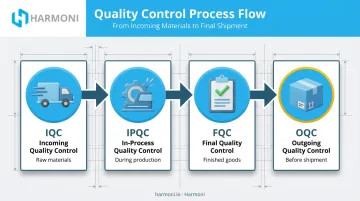
- Most manufacturers use a four-stage inspection process: Incoming (IQC), In-Process (IPQC), Final (FQC), and Outgoing (OQC).
- Technology is shifting inspection from a reactive, after-the-fact process to a proactive, real-time function powered by data orchestration.
What Is Quality Inspection in Manufacturing?
Quality inspection is the systematic process of examining, measuring, testing, and comparing products or components against a predefined set of specifications and standards. Its core purpose is to identify defects, deviations, and nonconformities before a product moves to the next production stage or reaches the customer.
This practice has evolved over the last century. Early manufacturing relied on manual "inspect and sort" methods, where finished goods were simply separated into good and bad piles.
The work of pioneers like Walter Shewhart in the 1920s and W. Edwards Deming in the 1950s shifted the focus toward statistical process control. Data was used not just to find defects, but to prevent them from happening in the first place.
Quality Inspection vs. Quality Control vs. Quality Assurance
These terms are often used interchangeably, but they represent different layers of a quality management system.
- Quality Assurance (QA): The broadest concept: a proactive, organization-wide system that builds quality into every process step.
- Quality Control (QC): Product-focused activities within QA, including preventive actions like calibration and process validation.
- Quality Inspection: A specific, reactive activity within QC: the hands-on act of checking a product against standards.
Think of it like building a car. QA is the blueprint for the factory and its processes. QC covers the procedures and training for assembly line workers. Inspection is the moment an inspector checks a door panel's alignment before it's attached to the frame.
Why Quality Inspection Matters
A robust quality inspection program drives profitability and long-term success rather than functioning as a simple cost center. It provides tangible benefits that ripple across the entire organization.
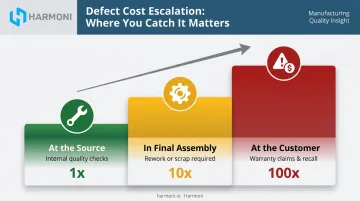
Reduces Costs and Waste Catching a defect early is always cheaper than finding it later. The cost of a nonconformance escalates dramatically the further it travels through production:
- At the source: A defective part can be scrapped or reworked for minimal cost
- In final assembly: Disassembly, repair, and retesting drive costs up exponentially
- At the customer: Warranty claims, recalls, and brand damage create catastrophic losses
Ensures Regulatory Compliance In industries like aerospace, defense, and medical device manufacturing, quality inspection is mandated by law. Regulatory bodies like the FAA and FDA require meticulous documentation and objective evidence that every part meets stringent safety and performance standards. Inspection records are the proof that supports compliance with standards like AS9100 and ISO 13485.
Builds Brand Reputation and Trust Every defective product that escapes the factory is a mark against your brand's reputation. Consistent, effective inspection protocols reduce defect escape rates, ensuring that customers receive products that work as expected. This reliability builds long-term trust and loyalty, which is one of the most valuable assets a manufacturer can have.
The 4 Types of Quality Inspection
Most manufacturers structure their inspection activities around four key checkpoints that cover the entire production lifecycle, from raw materials to final shipment.
1. Incoming Quality Control (IQC)
This is the first line of defense. IQC happens before production begins, focusing on raw materials, components, and sub-assemblies that come in from external suppliers. For example, an incoming batch of aluminum stock gets checked against its material certification before it ever reaches a CNC machine.
- What it checks: Verifying material certifications, checking for shipping damage, confirming part dimensions against drawings, and ensuring quantities are correct.
- Why it's important: Prevents defective supplier materials from entering your production stream, where they can cause delays, equipment damage, and faulty finished goods.
2. In-Process Quality Control (IPQC)
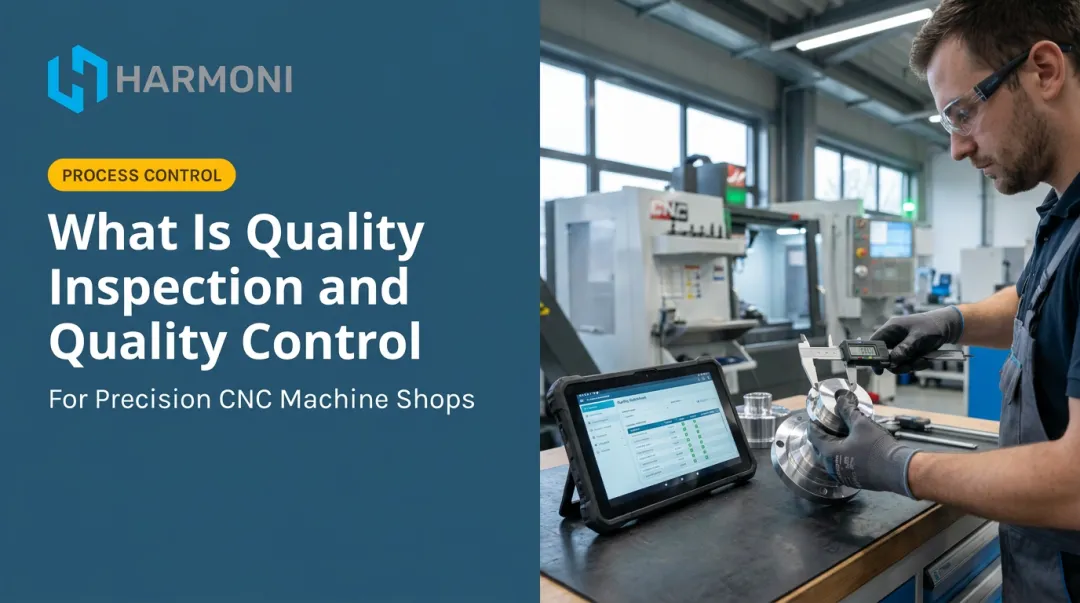
IPQC covers the ongoing checks that happen during active manufacturing. Rather than waiting until a batch is complete, inspectors or operators monitor the process in real-time. Many shops now digitize this step with connected checksheets and SPC software that flag out-of-tolerance readings immediately, rather than relying on paper logs.
- What it checks: Running first article inspections (FAI) to validate a new setup, performing regular checks at key operational steps, and monitoring statistical process control (SPC) charts for trends.
- Why it's important: Catches deviations as they happen, allowing for immediate adjustments. This prevents the creation of large quantities of scrap or rework.
3. Final Quality Control (FQC)
Also known as final inspection, FQC is the comprehensive check teams perform on products after manufacturing wraps up but before packaging begins. A finished aerospace bracket, for example, might undergo a CMM dimensional check, a visual inspection, and a functional fit test before sign-off.
- What it checks: Reviewing the product against final specifications, including appearance, functionality, safety features, dimensions, and overall workmanship.
- Why it's important: It's the last opportunity to catch defects that in-process checks missed, and it serves as official verification that the product is ready for the customer.
4. Outgoing Quality Control (OQC)
OQC is the very last checkpoint before a product ships. This step ensures teams package and document the fully inspected, finished product correctly. A single mislabeled box or missing certificate of conformance can trigger a shipment rejection, even on a flawless part.
- What it checks: Verifying packaging integrity, confirming shipping labels are accurate, ensuring all required accessories and documentation are on hand, and matching part numbers and quantities to the customer order.
- Why it's important: Prevents shipping errors, protects the product during transit, and ensures the customer's unboxing experience is seamless and professional.
The People and Processes Behind Quality Inspection
Effective inspection relies on a combination of skilled personnel and well-defined processes. The quality inspector is the hands-on expert, while statistical methods provide a framework for making smart, efficient decisions.
What Does a Quality Inspector Do?
A quality inspector is responsible for more than just looking at parts. Their role is multifaceted and requires a mix of technical skill, attention to detail, and strong communication.
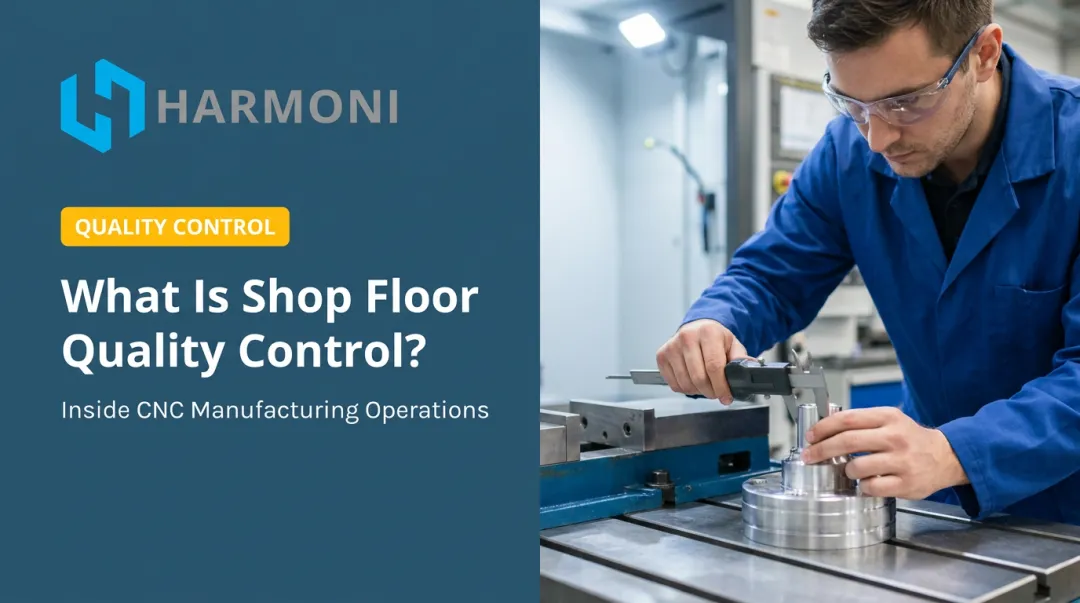
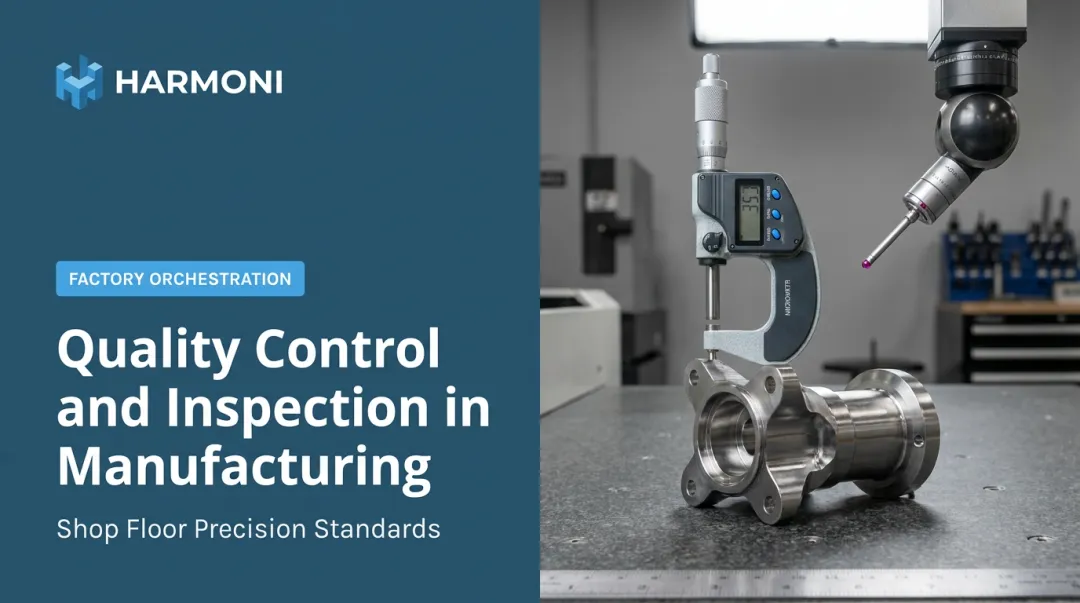
- Conducting Inspections: They use a variety of tools—from simple calipers and gauges to complex Coordinate Measuring Machines (CMMs)—to measure and test products against blueprints and specifications.
- Documenting Findings: Every inspection must be recorded. Inspectors generate detailed reports, log measurements, and formally flag any nonconformances for review. This data creates a vital, traceable record for compliance and analysis.
- Driving Improvements: When defects are found, inspectors collaborate with production, engineering, and sometimes even suppliers to understand the root cause. Their findings are critical for implementing corrective actions that prevent the problem from recurring.
Common Inspection Methods and Techniques
While inspectors bring hands-on expertise, checking every feature on every part is often impractical or prohibitively expensive. Instead, manufacturers use statistical techniques to make reliable decisions without checking everything.
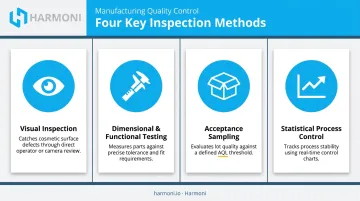
- Visual Inspection: The most basic method, where an inspector assesses a product for cosmetic defects like scratches, discoloration, or surface finish flaws.
- Dimensional & Functional Testing: Using calibrated tools to measure features and tolerances or performing tests to ensure a product operates as intended.
- Acceptance Sampling: A random sample is pulled from a production lot instead of inspecting every part. If defects stay below a set threshold, known as the Acceptance Quality Limit (AQL) under ISO 2859-1, the entire lot is accepted.
- Statistical Process Control (SPC): This technique uses control charts to monitor process performance over time. By tracking variation, operators can spot negative trends and make adjustments before the process starts producing defective parts, moving from detection to prevention.
Many shops now digitize these workflows rather than tracking them on paper. Harmoni's digital quality checksheets and SPC tools, for example, capture inspection data in real time and route it directly into ERP systems for full traceability.
How Technology Is Transforming Quality Inspection
The days of paper checksheets and siloed data are numbered. Technology is reshaping quality inspection, making it faster, more accurate, and more integrated than ever before. A 2025 Deloitte survey of 600 manufacturing executives found that 29% were already using AI/ML at the facility level, with top investment priorities including factory automation, sensors, and vision systems.
This shift is driven by a few key trends:
- Automation: Tools like AI-powered vision systems and automated CMMs can perform inspections with a speed and consistency that humans can't match, reducing error rates for high-volume checks.
- Real-Time Visibility: The biggest change is the move toward real-time, connected data. Instead of waiting for an end-of-shift report, managers can see quality issues developing the moment they happen.
- Predictive Analytics: By analyzing data from IIoT sensors on machines, advanced platforms can now identify patterns that precede defects, enabling proactive adjustments before any bad parts are even made.
This transformation is powered by a new category of software: factory orchestration platforms. Unlike standalone monitoring dashboards, these platforms unify data from machines, operators, and ERP systems into a single, cohesive view of the shop floor.
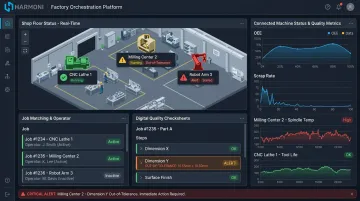
For example, a platform like Harmoni connects directly to CNC machines, your ERP, and operator stations. When a job starts, RFID technology automatically ensures the operator, machine, and job are correctly matched. The system then delivers the correct digital work instructions, CNC program, and digital quality checksheets for that specific engineering revision.
This creates a closed-loop system for in-process quality. If an operator logs a measurement trending out of tolerance on their digital checksheet, a manager gets alerted in real time, not hours later.
By ensuring the correct revision is always in use, this orchestration eliminates a huge source of scrap and rework. The result: fewer errors, complete traceability for audits, and truly accurate job costing, since quality data no longer sits isolated from production and financial systems.
To see how a factory orchestration platform can digitize your quality workflows, you can request a demo of Harmoni.
Frequently Asked Questions
What is meant by quality inspection?
Quality inspection is the process of examining, testing, and measuring products against predefined specifications. Its purpose is to verify conformity and identify any defects before a product is released to the next stage or to a customer.
What are the 4 types of quality inspection?
The four main types are Incoming (IQC) for supplier materials, In-Process (IPQC) during manufacturing, Final (FQC) for finished goods, and Outgoing (OQC) to verify packaging and shipping accuracy before delivery.
What does a quality inspector do?
A quality inspector measures and tests products using tools like calipers and CMMs, documents their findings in reports, and collaborates with production and engineering teams to resolve nonconformances and improve processes.
What is the difference between quality inspection and quality control?
Inspection is one specific activity within the broader system of quality control. Checking a product against a specification is inspection, while quality control also includes the preventive processes and corrective actions that keep those specifications met over time.
What tools do quality inspectors typically use?
Inspectors use a range of tools, including calipers, micrometers, gauges, Coordinate Measuring Machines (CMMs), and automated vision systems. They also rely heavily on digital inspection software and quality management platforms.
How is technology changing quality inspection in modern manufacturing?
Technology is turning inspection from a reactive check into a real-time process. Orchestration platforms like Harmoni's connect machines, operators, and ERP systems, so manufacturers catch quality issues as they happen instead of after the fact.