Introduction
Manufacturers are heading into 2026 with tighter margins and persistent skilled-labor shortages that leave almost no room for wasted shop-floor hours. Every clock-in error, every scrap part, every mystery gap between quoted and actual labor cost eats directly into profit.
The old fix, a wall-mounted time clock, no longer cuts it. Modern labor tracking software connects operator activity to machines, ERP systems, and production schedules, giving plant managers real-time visibility instead of a report they read the next morning.
This guide compares the top labor tracking platforms built for manufacturers in 2026. You'll learn what separates a real production tool from a glorified punch clock, and how to pick the right fit for your shop floor.
Key Takeaways
- Labor tracking software captures operator hours and job assignments in real time, improving job costing accuracy
- The strongest manufacturing options combine time capture with machine data, ERP integration, and shop-floor visibility beyond standalone time clocks
- Top picks: Harmoni, Fuse Workforce Management, TimeClock Plus, Prodsmart (Autodesk Fusion Operations), JobBOSS2, and Hubstaff
- Choose based on integration depth and deployment speed, plus the ability to prevent errors in real time, beyond simply logging hours after the fact
Overview of Labor Tracking Software in Manufacturing
Labor tracking software records, monitors, and analyzes employee hours, job activity, and production output across shifts and workcenters. That sounds simple, but manufacturing adds layers office-based time tracking never has to deal with.
The stakes are large. The manufacturing sector employed nearly 12.6 million workers as of June 2026, according to the National Association of Manufacturers.
The Manufacturing Institute projects a need for 3.8 million additional manufacturing employees between 2024 and 2033, with more than 1.9 million of those jobs at risk of going unfilled. Every hour of skilled labor on the floor becomes worth protecting.
Unlike office time tracking, manufacturing labor tracking has to reconcile:
- Operator hours clocked at the machine
- Machine run-time and spindle activity
- Job numbers tied to specific work orders
- ERP work orders that drive job costing and delivery dates
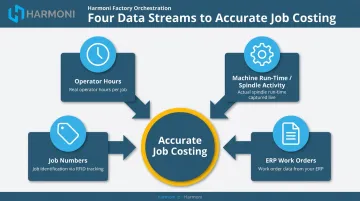
Get that reconciliation wrong, and job costs become guesswork. The comparison below covers tools ranging from basic time clocks to full factory orchestration platforms, so you can match complexity to your actual operation.
Top Labor Tracking Software for Manufacturers in 2026
We evaluated each platform against five criteria that matter on a real shop floor: manufacturing relevance, ERP/machine integration depth, real-time visibility, deployment speed, and demonstrated ability to reduce production errors. Clock-in/clock-out functionality alone didn't make the cut.
Harmoni
Harmoni is a factory orchestration platform, not a time clock. It's built for mid-to-large manufacturers in CNC machining, aerospace, defense, automotive, and healthcare manufacturing, sitting between ERP, MES, machines, and operators.
What sets it apart:
- RFID auto-detection: the system automatically recognizes nearby employees and jobs, eliminating manual clock-ins and job lookups
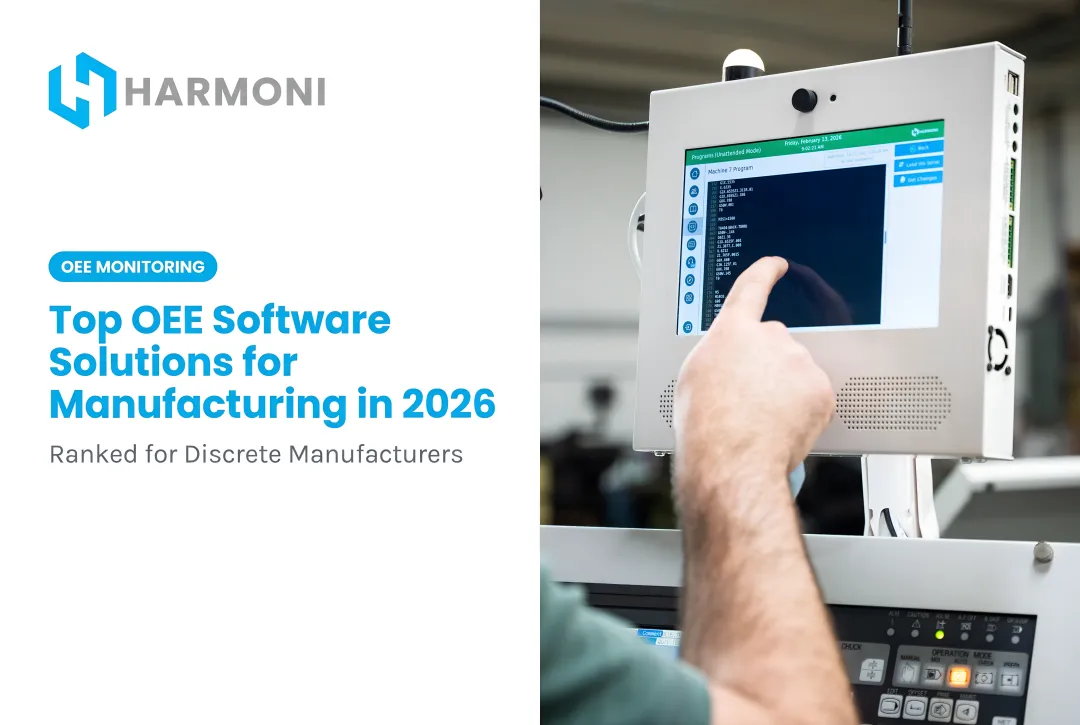
- Centralized command center at each workcenter: operators clock in, load programs, and complete quality checksheets at the machine, not a shared terminal
- Three core pillars: automation, process control, and observability, designed to prevent scrap and mistakes in real time, not just log them afterward
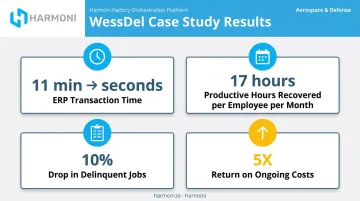
One aerospace and defense supplier, WessDel, cut ERP transaction time from 11 minutes to seconds, recovering 17 productive hours per employee per month and a 5X return on ongoing costs. Delinquent jobs dropped 10%.
| Key Features | RFID auto-detection of employees/jobs, real-time dashboards combining machine, ERP, and operator data, automated elimination of non-productive tasks |
| Best For | Mid-to-large manufacturers (CNC, aerospace, defense, automotive, healthcare manufacturing) needing accurate job costing and real-time production visibility |
| Integrations | Works alongside ERP/MES systems including Epicor, Infor, JobBoss, and machine platforms including Haas, Mazak, Fanuc, DMG MORI, and Siemens |
Fuse Workforce Management
Fuse is an all-in-one HCM platform that unifies time and attendance, HR, and payroll into a single system. It's less about the shop floor and more about giving HR and workforce planners one place to manage labor data.
Its dashboards support staffing decisions aligned to production needs, making Fuse a strong fit for manufacturers who want labor tracking bundled with broader HR functions rather than a standalone add-on.
| Key Features | Time and attendance, payroll integration, HR management, workforce reporting dashboards |
| Best For | Manufacturers wanting labor tracking combined with full HCM/payroll functionality |
| Deployment | Cloud-based, suited to mid-size manufacturing HR teams |
TimeClock Plus
TimeClock Plus is a cloud-based time and attendance system with GPS-enabled mobile clock-in and both cloud and on-premises hosting options. It's built for compliance-heavy environments with union rules, shift differentials, and FLSA requirements.
The platform's strength is detailed labor reporting paired with broad payroll integration. TCP supports connections to more than 800 payroll vendors, which matters if your shop already has a payroll system it doesn't want to replace.
| Key Features | GPS mobile clock-in, employee self-service, detailed labor reports, configurable pay-rule enforcement |
| Best For | Manufacturers needing reliable, customizable time and attendance without deep production-floor integration |
| Deployment | Cloud-based with on-site hosting option |
Prodsmart (now Autodesk Fusion Operations)
Prodsmart was acquired by Autodesk in 2022 and now operates as Fusion Operations. It's a production-floor tracking tool built for manufacturing and fabrication, matching work orders and schedules to employee hours.
Shift-management features and near-real-time productivity monitoring help floor supervisors coordinate labor without leaving the floor, which matters when a schedule needs adjusting mid-shift.
| Key Features | Work order matching, shift management, worker productivity reporting, near-real-time production visibility |
| Best For | Small-to-mid manufacturers wanting production-specific labor tracking without a full orchestration layer |
| Deployment | Mobile and desktop app for shop floor use |
JobBOSS2
JobBOSS2 (ECI) is shop management software with built-in scheduling and shift management, purpose-built for job shops. Schedules adjust based on inventory availability and delivery deadlines rather than static assumptions.
As an ERP already widely used in precision manufacturing, JobBOSS2 pairs labor scheduling directly with job completion tracking, provided your team consistently logs labor time and completed pieces to keep the schedule accurate.
| Key Features | Work scheduling module, shift adjustment tools, job-deadline-based scheduling, employee/work-center capacity views |
| Best For | Job shops and precision manufacturers already using JobBOSS2 as their ERP |
| Deployment | Integrated module within the JobBOSS2 ERP suite |
Hubstaff
Hubstaff is a general-purpose scheduling and time-tracking platform with GPS tracking for multi-location staff and automated alerts for missed or abandoned shifts. It's added manufacturing-specific messaging in recent years, but it still lacks native machine-runtime or ERP work-order integration.
That makes it a reasonable fit for manufacturers with hybrid office-plus-floor teams, but not for anyone needing job costing tied to actual production data.
| Key Features | GPS tracking, online timesheets, pay-rate setting, automated absence alerts |
| Best For | Manufacturers with multi-site or hybrid (office + floor) workforces needing basic tracking |
| Deployment | Cloud/mobile app, not manufacturing-specific |
How We Chose the Best Labor Tracking Software
Our evaluation focused on manufacturing relevance first. A time clock that logs hours perfectly but can't tell you which job those hours belong to isn't solving the problem manufacturers actually have.
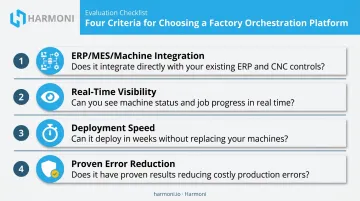
We weighted four factors:
- ERP/MES/machine integration capability: can the tool tie labor hours to actual production data and job costs?
- Real-time visibility: does it surface issues as they happen, or only in a report the next day?
- Deployment speed: weeks, or months of implementation?
- Proven error reduction: is there documented improvement in job costing accuracy or scrap reduction?
A common mistake we see manufacturers make is picking a generic time-clock tool on price alone, without checking whether it connects to the ERP or machine data that drives job costs.
As Modern Machine Shop notes, associating labor and machine time with ERP jobs, not just collecting punches, is what separates useful shop-floor data from noise.
Beyond these four factors, we weighed scalability across shifts, how easily operators adopt the tool on the floor, and each vendor's track record with similar manufacturers.
Conclusion
The right labor tracking software connects labor data to your machines, your ERP, and your actual job costs. That connection, not brand name or sticker price, is where the real savings live.
Before you commit, pilot a shortlist against your own shop floor conditions. Test integration depth, watch how fast operators actually adopt it, and measure time-to-value in weeks, not quarters.
If you're running CNC machining, aerospace, defense, automotive, or precision manufacturing operations, you want labor data tied to real production activity instead of a punch clock. Harmoni's factory orchestration platform is built for exactly that, deploying in weeks and working with equipment you already own, with no machine replacement required.
Reach out to sales@harmoni.io or call (888) 341-4097 to see what real-time labor visibility looks like on your own shop floor.
Frequently Asked Questions
What is a labor tracking system?
A labor tracking system is software that records employee hours, job assignments, and productivity data. Manufacturing-grade systems go further, tying that data to machines and ERP workflows for accurate job costing.
What do employers use to track employees?
Common methods include mobile GPS apps, RFID badges, biometric kiosks, and ERP-integrated time clocks. Manufacturers increasingly use RFID and sensor-based systems for greater shop-floor accuracy.
What features should manufacturers look for in labor tracking software?
Look for real-time visibility, deep ERP or machine integration, accurate job costing, and ease of operator adoption on the floor. A tool that checks only one or two of these boxes will leave gaps.
How is manufacturing labor tracking different from general workforce management software?
Manufacturing labor tracking must reconcile operator hours with machine run-time and job numbers. General workforce management tools are built for office attendance, not production accuracy.
Can labor tracking software integrate with ERP and machine data?
Yes. Manufacturing platforms like Harmoni sit between ERP, MES, and machines, unifying operator, machine, and workflow data into a single dashboard rather than three disconnected systems.
How much does labor tracking software cost for manufacturers?
Pricing typically runs per-user/month or as platform-based enterprise pricing, depending on the vendor. Weigh the cost against real reductions in scrap, errors, and wasted labor time rather than comparing sticker prices alone.