
Introduction
Many manufacturers have the right systems on paper: an ERP handling orders, a scheduling process, defined SOPs — and still struggle with wasted time, inconsistent execution, and zero real-time visibility into what's happening on the shop floor.
In practice, operators are hunting for information, machines sit idle between jobs, and problems get discovered after scrap is already made.
The manufacturing system itself is often at the root of those outcomes. Not because the wrong system was chosen, but because the visibility and coordination layer connecting systems to operators was never built.
This guide covers what manufacturing systems are, how the six primary types differ, what they must accomplish within operations management, and where modern technology — including factory orchestration platforms like Harmoni — is closing the gap between planned production and what actually ships.
Key Takeaways
- A manufacturing system coordinates people, equipment, processes, and data to transform raw inputs into finished goods
- Six primary system types each suit different production volumes, flexibility needs, and industries
- Manufacturing operations management uses these systems to hit quality, cost, compliance, and delivery goals
- Most facilities struggle not with choosing the right system type, but with the visibility and coordination layer that connects systems to operators in real time
What Is a Manufacturing System in Operations Management?
A manufacturing system is the structured combination of people, equipment, materials, methods, and software used to transform raw materials into finished products. It encompasses the entire workflow logic behind how work gets done — who does what, in what order, using which tools and specifications, and how that activity gets recorded and acted upon.
How Manufacturing Systems Fit Within Operations Management
Within operations management, manufacturing systems serve as the execution backbone. They translate production plans — managed in ERP or MES systems — into physical output on the shop floor. Every lead time, cost figure, quality outcome, and capacity decision traces back to how well the manufacturing system is designed and managed.
The distinction matters: the manufacturing system defines how you produce, while manufacturing operations management (MOM) covers how you plan, control, and improve production. These two must stay tightly connected.
When they drift apart — when the plan in the ERP doesn't match what's actually running on the floor — you get the waste, delays, and errors that erode margin.
Where MOM Sits in the ISA-95 Framework
The ISA-95 standard provides a useful reference for understanding these layers:
| ISA-95 Level | Scope |
|---|---|
| Level 4 | Business planning and logistics (ERP) |
| Level 3 | Manufacturing operations management (MOM/MES) |
| Level 2 | Monitoring and supervisory control |
| Level 1 | Sensing and manipulating the production process |
| Level 0 | Physical production processes |
Manufacturing operations management sits at Level 3 — between business planning systems and the machines themselves. The manufacturing system is what gets executed within that layer.
Why System Choice Is a Strategic Decision
The manufacturing system type you choose and configure shapes every operational outcome downstream. Key dimensions affected include:
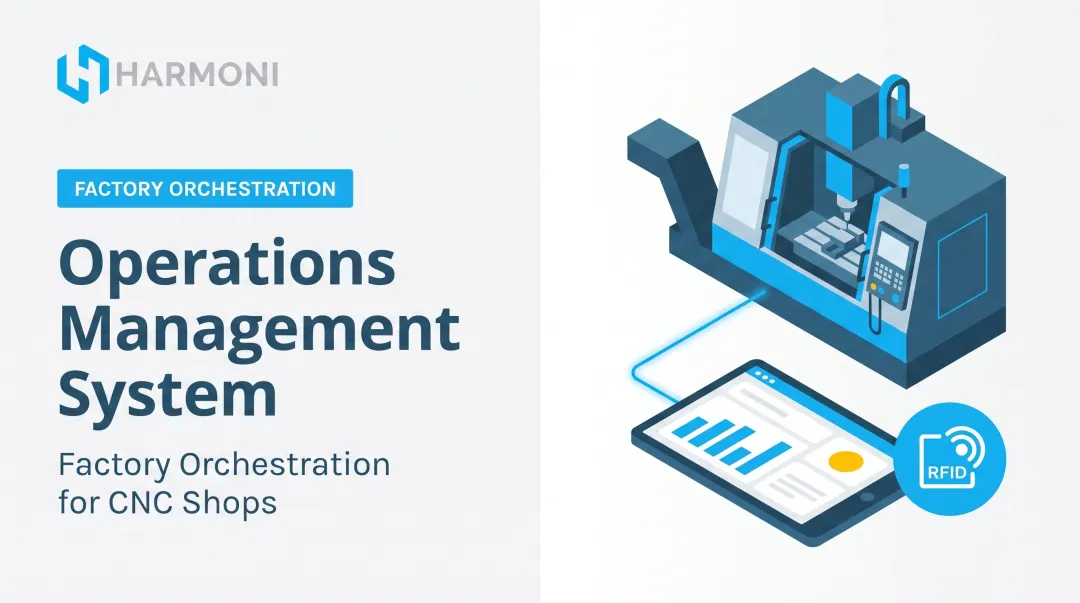
- Automation readiness — whether the system can support machine data collection, RFID-driven workflows, and automated program loading
- Scheduling flexibility — how well the system handles high-mix, low-volume demand or sudden order changes
- Quality control points — where inspection, checksheets, and revision control get enforced in the workflow
- Cost structure — labor utilization, scrap rates, and job costing accuracy all flow from system design
- Demand responsiveness — how quickly the shop floor can react when plans change

The Main Types of Manufacturing Systems
No single system fits every environment — the right choice depends on product complexity, volume, variation, and flexibility requirements. The six primary types each make different trade-offs.
Discrete Manufacturing
Discrete manufacturing produces distinct, countable finished products — automotive components, medical devices, aerospace parts — where each unit can be individually tracked, inspected, and costed. This makes it well-suited for high-mix or high-precision environments where part-level traceability is a compliance requirement, not just a preference.
Repetitive Manufacturing
Repetitive manufacturing runs the same or very similar products continuously with minimal changeover. Consumer electronics, appliances, and standardized automotive parts are typical examples. High volume and low unit cost come at the cost of flexibility. Any demand shift requiring product variation creates friction.
Job Shop Manufacturing
Job shop environments use defined production areas rather than fixed assembly lines, enabling small-batch custom work. Precision machining, specialty aerospace components, and custom tooling all fit here. The scheduling complexity is real — with dozens of active work orders routing through overlapping workcenters, visibility into job status and operator assignments becomes critical.
Batch Manufacturing
Batch manufacturing produces a set quantity through a defined sequence before the next batch begins. Pharma, food and beverage, and chemical manufacturing rely heavily on this model because traceability and quality consistency across each batch are regulatory requirements. The ISA-88 standard governs batch process control, covering models, terminology, and production record structures.
Continuous Manufacturing
Continuous manufacturing moves raw material through production steps without stopping between units — maximizing throughput and minimizing unit cost. Oil refining, paper, and bulk chemicals operate this way. Long setup requirements and near-zero flexibility once running define this model; it's suitable only when volume justifies the lock-in.
Additive Manufacturing
Additive manufacturing (3D printing) builds parts layer by layer rather than cutting material away or molding it. It's valuable for prototyping, low-volume aerospace and medical parts, and on-demand components. NIST research identifies current limitations: slow metal build rates, expensive materials, substantial post-processing requirements, and first-build success rates around two in three — improving to roughly 90% on a second attempt.
System Type Comparison
| System Type | Flexibility | Cost Efficiency | Scalability | Setup Time | Automation Readiness | Best-Fit Industries |
|---|---|---|---|---|---|---|
| Discrete | High | Moderate | Moderate | Moderate | High | Aerospace, medical devices, automotive |
| Repetitive | Low | High | High | Low | Very High | Consumer electronics, appliances |
| Job Shop | Very High | Lower | Low | High | Moderate | Precision machining, custom tooling |
| Batch | Moderate | Moderate | Moderate | Moderate | High | Pharma, food & beverage, chemicals |
| Continuous | Very Low | Very High | High | Very High | High | Oil refining, paper, bulk chemicals |
| Additive | Very High | Low (at scale) | Low | Low | Moderate | Prototyping, low-volume specialty parts |

Key Components That Make Manufacturing Systems Work
A manufacturing system is only as strong as its weakest component. The core structural elements include:
- Equipment and machinery — the physical assets performing the work
- Raw materials and inventory — the inputs that flow through the system
- Labor and skills — operators, technicians, and engineers executing the work
- Production methods and SOPs — the documented logic governing how work gets done
- Software and control systems — ERP, MES, SCADA, and machine controllers
- Workflow and scheduling logic — the sequencing rules that determine job priority and routing
The Integration Requirement
Each component must share real-time data with the others for the system to function efficiently. Siloed components create the waste that erodes margin: machines that don't report status to the ERP, operators who can't see their job queue in real time, quality data captured on paper and reconciled hours later.
According to a Manufacturing Leadership Council survey, 70% of manufacturers still collect data manually, and 44% reported that collected data had at least doubled over the previous two years. The data exists — it's just not flowing where it needs to go.
Quality and Maintenance as Embedded Components
Quality control and maintenance aren't afterthoughts — they're structural elements of the manufacturing system. How a system handles defect detection, scrap tracking, and equipment upkeep directly determines Overall Equipment Effectiveness (OEE) and true job cost accuracy.
That integration gap is where factory orchestration platforms like Harmoni close the loop. Digital quality checksheets live directly at each workcenter, OEE is tracked in real time across availability, performance, and quality dimensions. Scrap events are captured as they happen — not reconstructed from end-of-shift paperwork.
How Manufacturing Systems Drive Operations Management Goals
Manufacturing operations management must deliver on five primary goals: cost control, quality consistency, on-time delivery, regulatory compliance, and continuous improvement. The manufacturing system type and its configuration either enables or constrains each one.
Cost Control
The manufacturing system determines labor efficiency, machine utilization, and scrap rates — the three levers that drive job cost accuracy. When operators spend time hunting for job information instead of running parts, or when machines sit idle between setups because the next job isn't clearly queued, those costs accumulate invisibly.
Harmoni's RFID-based automation addresses this directly. At WessDel — an aerospace and defense component manufacturer — each ERP transaction was consuming an average of 11 minutes per operator when performed at shared terminals. After deploying Harmoni, those transactions happened in seconds at the machine, recovering 17 productive hours per employee per month.
Quality and Compliance
In regulated industries, the manufacturing system must enforce process adherence at the point of execution. Aerospace manufacturers under AS9100, defense contractors subject to ITAR and CMMC, and medical device manufacturers under the FDA's Quality Management System Regulation (QMSR) — effective February 2, 2026 and incorporating ISO 13485 by reference — all share one non-negotiable: the right process must be followed, every time, with an auditable record.
Harmoni enforces this through:
- Digital work instructions with revision control — the correct SOP is delivered automatically based on RFID-detected job and part revision
- Automated CNC program loading — eliminates operator selection errors by loading the correct program, settings, and offsets automatically
- Digital quality checksheets — timestamped inspection records at the machine, replacing paper-based processes
- Multifactor machine authentication — enforces access control for ITAR-controlled programs and supports CMMC-aligned cybersecurity requirements

Real-Time Visibility
Managers cannot improve what they cannot see, and they can't catch problems with data that arrives at end-of-shift. The manufacturing system must generate actionable data — machine status, operator activity, job progress, scrap events — as operations unfold.
Harmoni's observability pillar surfaces this in real time through:
- Real-time machine monitoring — live status across all connected equipment
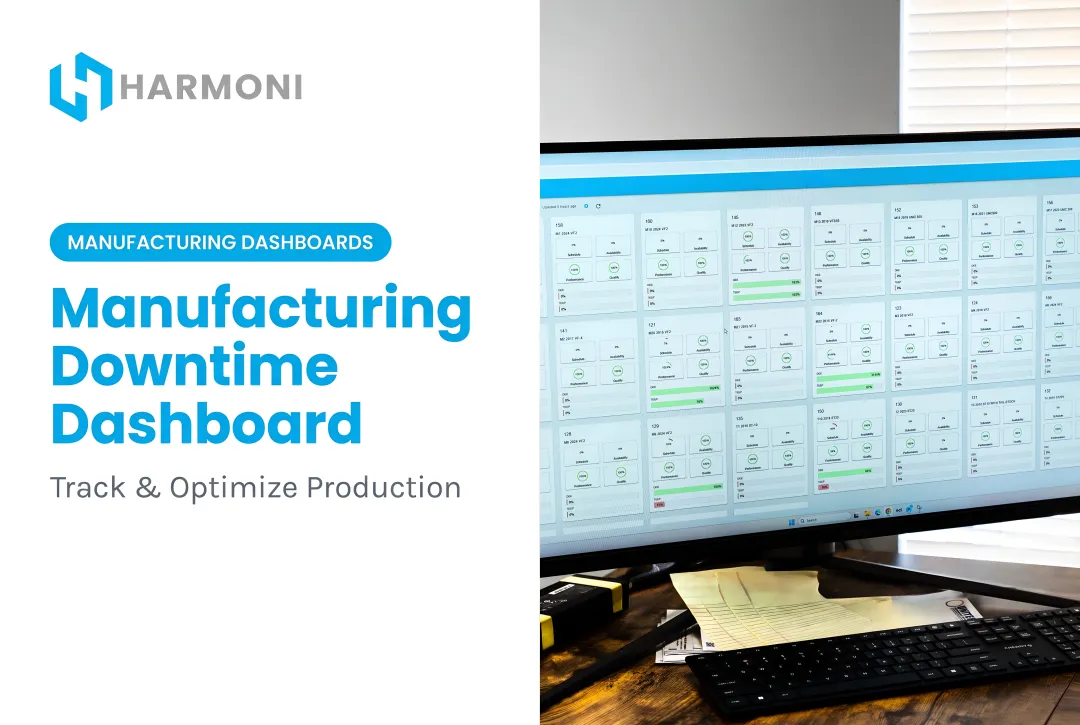
- OEE dashboards — availability, performance, and quality tracked continuously
- Visual factory indicator lights — green/yellow/red signals by performance level for instant floor-level awareness
- Unified shop floor dashboards — machine data, operator activity, and ERP workflows in one view
Workforce Coordination
Even the best equipment setup fails when operator execution is inconsistent or undirected. The manufacturing system must manage the human layer — ensuring operators know which job to run, which tools to use, which specifications apply, and when to escalate.
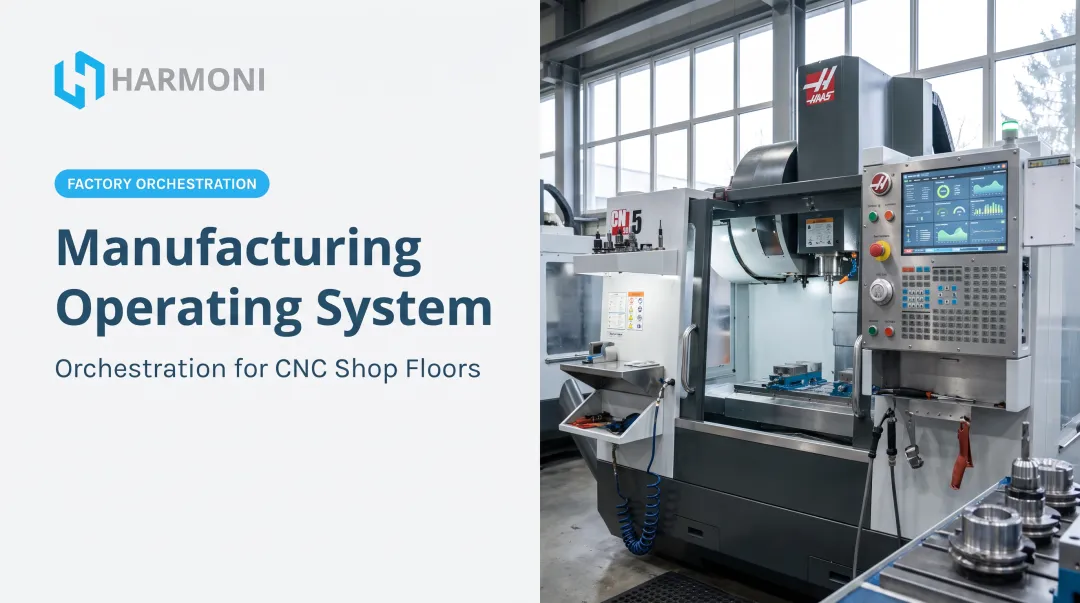
Harmoni's machine-side operator command center handles this by combining RFID job identification with automatic delivery of work instructions, setup sheets, quality checksheets, and the correct CNC program — so operators have everything they need at the workcenter, without searching.
Common Challenges in Managing Manufacturing Systems Today
The Execution Gap
The most persistent problem in manufacturing operations is the disconnect between what ERP and MES systems plan and what actually happens on the shop floor. Manual data entry delays, operator uncertainty, unplanned downtime, and lack of real-time coordination between systems and people all contribute.
WessDel experienced this clearly. Despite running a fully implemented ERP system, there was a measurable gap between what the system recorded and what was actually happening on the floor — because the data capture process depended on operators walking to shared terminals, which introduced both delay and inaccuracy.
The Visibility Problem
Most mid-to-large manufacturers still rely on lagging indicators — end-of-shift reports, manual job tracking, paper travelers — to understand production performance. Problems are discovered after scrap is made, after deadlines are missed, after costs have already overrun.
NIST estimates the cost of incompatible data formats and interoperability failures at $20.9B to $42.9B across U.S. manufacturing. The business case for real-time visibility isn't aspirational — it's financial.
The Integration Challenge
Most facilities run several disconnected systems that don't share data natively:
- ERP platforms managing jobs, scheduling, and costing
- MES or production tracking systems logging work orders
- CNC machine controllers holding program and cycle data
- Operator-facing tools capturing labor and quality records
The result is data islands. Each system knows part of the story, but no single system — and no single person — has a complete, real-time view of what's happening on the floor. Closing that gap requires a coordination layer that sits between all of these systems and connects them in real time.

Modernizing Your Manufacturing Systems with Technology
ERP systems handle planning and business logic. MES systems manage production rules and execution at a broad level. Machine controllers run equipment. The gap most facilities haven't closed sits between these layers — where operator guidance, real-time machine data, and job context fail to converge at the point of work. Closing that gap requires a coordination layer that sits across all three.
Factory Orchestration: Bridging the Coordination Gap
Factory orchestration is an approach built to bridge this gap. A factory orchestration platform sits between ERP systems, MES systems, machines, and operators — delivering real-time coordination across all four.
Harmoni pioneered this category. The platform combines machine data with operator activity and ERP workflows into a unified view, automates non-productive tasks (including ERP transaction entry, program loading, and job routing), and gives operators a centralized command center at each workcenter so execution is consistent and accountable.
It deploys in weeks without requiring machine replacement. Harmoni retrofits to existing equipment regardless of age or manufacturer, with native compatibility for Mazak, Haas, Fanuc, Heidenhain, Siemens, DMG MORI, Makino, and Fadal controls, and ERP integrations with Epicor, Infor, JobBoss, ABAS, and ODOO.
What to Look for When Modernizing
When evaluating technology to strengthen your manufacturing system's execution layer, prioritize:
- Real-time data integration across machines and business systems (not batch uploads or end-of-shift syncs)
- Operator-facing tools that guide execution rather than just report on it after the fact
- Fast deployment timelines — weeks, not years, to see measurable impact
- Layered capability — automation and observability that enhances existing ERP and MES infrastructure rather than replacing it
Deloitte's 2025 Smart Manufacturing Survey of 600 U.S. manufacturing executives found that 33% prioritized execution systems for investment within 24 months, and respondents reported average production-output improvements of 10%–20% from smart manufacturing investments. Facilities that invest in a capable coordination layer are best positioned to capture those gains.

Frequently Asked Questions
What is the difference between a manufacturing system and a manufacturing execution system (MES)?
A manufacturing system is the broader operational framework — people, equipment, processes, materials, and software — used to produce goods. An MES is a specific software layer that manages and executes production rules, work orders, and shop floor activities within that system. The manufacturing system is the whole; the MES is one component of it.
What are the most common types of manufacturing systems used in operations management?
The six primary types are discrete, repetitive, job shop, batch, continuous, and additive. Most manufacturers operate within one dominant type, but increasingly blend elements of multiple systems to handle mixed-volume or high-customization demand — particularly in job shop and discrete environments.
How do manufacturing systems affect product quality and cost control?
The manufacturing system determines where quality checks occur, how process adherence is enforced, and how labor and machine time are allocated. Those decisions directly drive scrap rates, rework costs, and job costing accuracy — making system configuration a cost control issue as much as an operational one.
What is the role of ERP systems in manufacturing operations management?
ERP is the business planning layer that manages orders, inventory, scheduling, and financials. For ERP plans to translate into actual production outcomes, the system must connect to the shop floor execution layer. The gap between ERP data and shop floor reality is one of the most common — and costly — sources of manufacturing inefficiency.
How do manufacturers decide which manufacturing system is right for their operation?
The right system depends on five factors: production volume, product complexity, required lead times, cost structure, and automation readiness. The best fit matches how work actually runs in your facility — not how a textbook describes an idealized environment.
What does factory orchestration mean in the context of modern manufacturing systems?
Factory orchestration is a technology approach that coordinates people, machines, ERP systems, and engineering requirements in real time — filling the coordination gap between business planning systems and shop floor execution. The goal is eliminating wasted time, reducing errors, and providing live production visibility across every active job and workcenter.