
Workflow automation software fixes this by connecting your apps and letting rules (or AI) handle the busywork. In 2025, 58% of US small businesses used generative AI, up from 40% the year before, a sign that automation adoption is accelerating fast across the country (U.S. Chamber of Commerce).
This guide breaks down the top workflow automation platforms available to US businesses in 2026 and how to pick the right one for your team.
Key takeaways
- Workflow automation moves data and triggers actions across apps using rules or AI—cutting manual handoffs
- Zapier, n8n, Make, Workato, and Microsoft Power Automate lead the pack, each fitting different technical skill levels and budgets
- Pick on ease of use, integration depth, AI capability, and scalability—not brand recognition
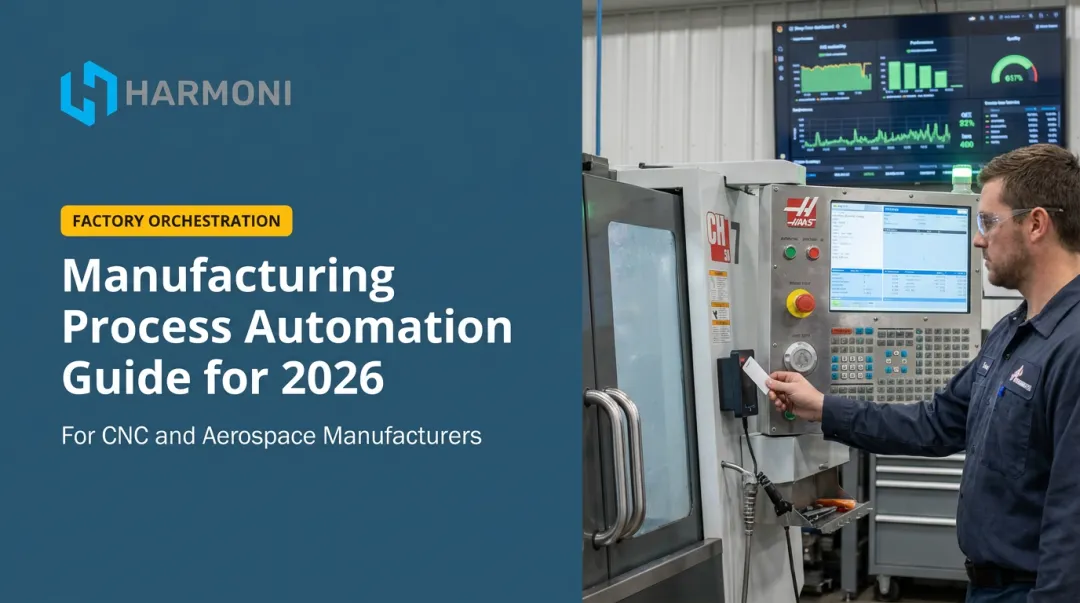
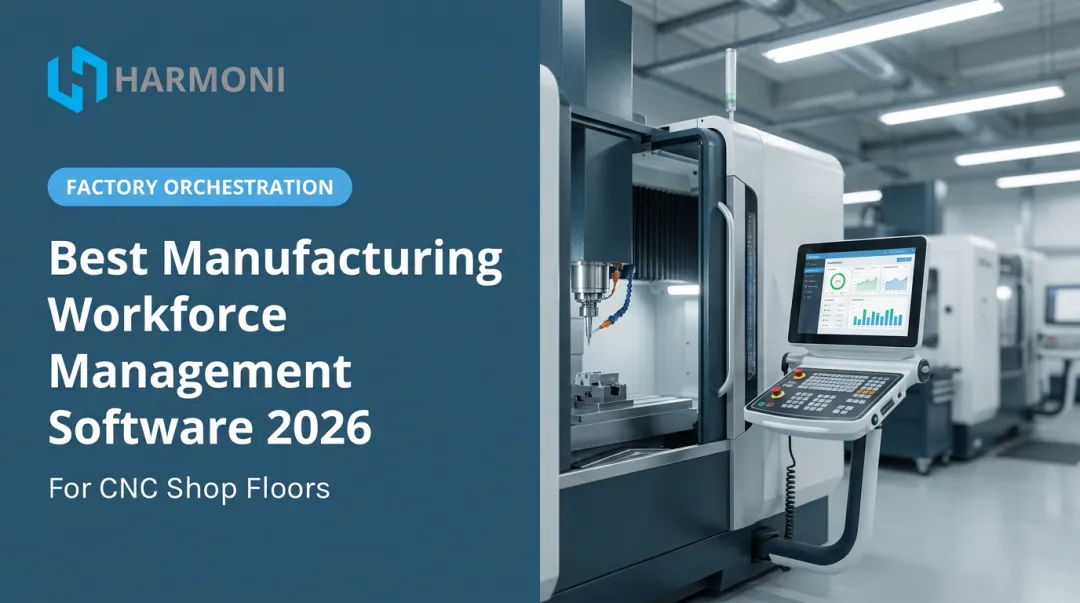
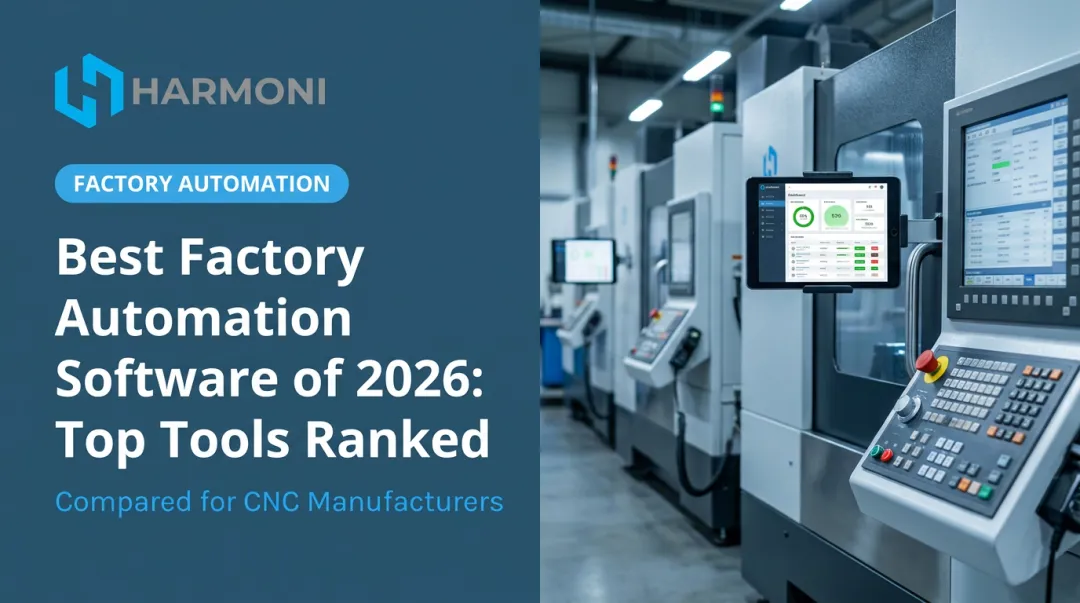
- Manufacturers need shop-floor orchestration: general office tools can’t reach machines, operators, or ERP
Overview of Workflow Automation Software in the US Market
Workflow automation software connects apps and systems, then automates repetitive, rule-based, or AI-driven tasks across your business.
Adoption is spreading fast across marketing, sales, operations, IT, and manufacturing teams nationwide. No single clean US market figure covers this exact category, but the signals are strong.
McKinsey found 88% of organizations globally reported regular AI use in at least one business function in 2025, up from 78% the year before (McKinsey).
Below, we rank the top platforms available to US businesses based on:
- Flexibility
- Integration breadth
- Reliability
Top Workflow Automation Software for US Businesses in 2026
US teams comparing automation platforms in 2026 should weigh ease of use, integration breadth, AI capability, pricing transparency, and scalability. Here is how five leading options stack up on those criteria.
Zapier
Zapier is the most widely adopted no-code automation platform, built for non-technical teams that need to connect apps fast.
What sets it apart:
- Over 9,994 supported apps
- Copilot AI assistant that builds workflows from plain-language instructions
- Strong reliability track record and support resources
| Pricing | Key Features | Best For |
|---|---|---|
| Free tier; paid plans start around $19.99–$29.99/month | No-code builder, AI steps, Tables & Interfaces | Non-technical teams and SMBs |

Pricing is task-based, so higher-volume teams should model actual usage before committing.
n8n
n8n is an open-source, source-available platform built for technical teams that want deep customization and control.
What sets it apart:
- Self-hosting option for full deployment control
- JavaScript/Python code fallback for custom logic
- Execution-based pricing rather than per-step billing
| Pricing | Key Features | Best For |
|---|---|---|
| Free self-hosted; cloud plans from roughly $20–$24/month equivalent | Custom code nodes, 4,000+ templates, SOC 2 report available to enterprise customers | Developers and enterprise IT teams |
Make
Make is a visual automation platform known for granular data transformation and multi-branch scenario building.
What sets it apart:
- Budget-friendly credit system with transparent entry pricing
- Detailed routers and iterators for complex branching logic
- Large template library with AI model integrations
| Pricing | Key Features | Best For |
|---|---|---|
| Free tier; plans from roughly $9–$19/month | Visual scenario builder, AI provider integrations, MCP support | Ops teams needing multi-branch logic |
Workato
Workato is an enterprise integration platform (iPaaS) built for cross-departmental orchestration with heavy governance requirements.
What sets it apart:
- Role-based access control and centralized governance dashboards
- SAML SSO, MFA, custom OAuth profiles, and encryption
- AI agent library called "Genies" plus the AIRO copilot
| Pricing | Key Features | Best For |
|---|---|---|
| Custom enterprise pricing (quote required) | 1,200+ connectors, SLAs, AIRO copilot | Large enterprises with complex compliance needs |
Microsoft Power Automate
Power Automate is Microsoft's native automation tool, built directly into the M365 and Power Platform ecosystem.
What sets it apart:
- Deep integration with Outlook, Excel, SharePoint, and Teams
- Hybrid cloud plus desktop RPA (attended and unattended bots)
- AI Builder and Copilot for natural-language workflow creation
| Pricing | Key Features | Best For |
|---|---|---|
| Free trial; plans from $15/user/month | AI Builder, Copilot support, attended/unattended bots | Microsoft-centric organizations |

Microsoft notes that final checkout pricing can vary by country, currency, and organization, so confirm actual costs before signing.
How We Chose the Best Workflow Automation Software
Buyers often make two costly mistakes: picking a tool based on brand recognition alone, or ignoring credit-based pricing that scales unpredictably as usage grows.
We weighed five factors:
- Ease of use — how quickly a non-technical team can build a working automation
- Integration breadth — the number and depth of supported apps and systems
- AI-native capabilities — whether AI assistance speeds up workflow building
- Governance and security — access controls, audit logs, and compliance readiness
- Total cost of ownership at scale — what happens to pricing once volume grows 10x
App and connector counts aren't apples-to-apples. Zapier lists 9,994+ apps, Make lists 3,000+, and Workato lists 1,200+ connectors, but each vendor defines "connector" differently. Compare your specific required apps, not headline numbers.
None of these five platforms reach machine-level data on a factory floor. They automate office workflows between SaaS apps, not coordination between operators, CNC machines, and ERP/MES transactions on a production line. That work requires an entirely different category: factory orchestration.

Conclusion
The "best" workflow automation software isn't the one with the most integrations or the biggest brand name. It's the one that fits your operational goals, skill level, and real budget as you grow.
Before you commit:
- Test your top pick on a real use case from your own workflow
- Model pricing at expected volume, not the entry-level tier
- Confirm security and compliance needs upfront, especially in regulated industries
If you're a mid-to-large manufacturer automating the shop floor—not just office apps—Harmoni's factory orchestration platform coordinates operators, machines, and ERP/MES systems in real time. Long-range RFID detects the employee and job at each machine, then ties that data to the right work instructions, CNC programs, and ERP transactions.
One aerospace and defense manufacturer, MSI, nearly eliminated part-count errors on complex, high-risk jobs. Another customer, WessDel, gained 17 productive hours per employee per month and a 10% drop in delinquent jobs.
Deployment usually takes weeks, not months, with no machine replacement required. Request a free demo to see how it fits your shop floor.
Frequently Asked Questions
What is workflow automation?
Workflow automation is software that automates repetitive, rule-based tasks between apps and systems without manual intervention. It connects triggers and actions so data moves and tasks complete on their own.
What is the difference between workflows and automation?
A workflow is the defined sequence of steps a process follows, such as "receive form, notify manager, update database." Automation is the technology that executes those steps without human action.
What are workflow automation examples?
Common examples include auto-syncing CRM leads into your email platform, sending approval notifications when a request comes in, and generating reports automatically from form submissions.
What software can I use to automate workflows?
Zapier, Make, n8n, and Microsoft Power Automate are common starting points, depending on your team's technical skill level and budget. Enterprise teams with governance needs often look at Workato instead.
Does Microsoft 365 have a workflow tool?
Yes. Microsoft Power Automate is the native workflow automation tool built into the M365 and Power Platform ecosystem, with deep integration into Outlook, Excel, SharePoint, and Teams.
What is an integration workflow?
An integration workflow connects two or more systems so data or actions flow automatically between them, based on defined triggers. For example, a new CRM lead could automatically trigger a welcome email and a task assignment.