
Introduction
Lost tools. Missing pallets. A forklift nobody can find during a shift change. Every manufacturer and logistics manager knows this pain — physical assets scattered across facilities, fleets, and supply chains with almost no real-time visibility into where they are or what condition they're in.
That blind spot costs money. It shows up as idle labor hunting for equipment, emergency purchases to replace "lost" tools that were never actually lost, and downtime nobody saw coming.
IoT asset tracking combines sensors, wireless connectivity, and cloud software to turn static inventory lists into real-time data streams.
This article covers what IoT asset tracking is, the technologies behind it, the benefits worth chasing, and real-world use cases across industries. It also explores how the concept extends into machine and labor visibility on modern manufacturing floors.
Key Takeaways
- IoT asset tracking delivers real-time visibility into location, condition, and usage
- Automated data collection replaces manual audits, cutting labor hours and errors
- Predictive maintenance using usage data extends asset life and prevents downtime
- On the shop floor, tracking extends beyond location to labor, machine, and job-level visibility
What Is IoT Asset Tracking and How Does It Work?
IoT asset tracking uses sensors, wireless connectivity, and cloud software to monitor the location, status, usage, and movement of physical assets throughout their lifecycle. Instead of manually logging where equipment sits or when it was last serviced, a tag is attached once. The asset then reports its own data continuously, with no human intervention required.
That's the core shift: from periodic manual checks to always-on visibility.
Step-by-Step: The IoT Asset Tracking Process
- Sensors capture data: GPS, RFID, temperature, or motion sensors are physically attached to the asset and begin recording data points the moment they're activated.
- Data transmits wirelessly: captured information moves via cellular, LPWAN, or Wi-Fi networks to a cloud platform, often in near real time.
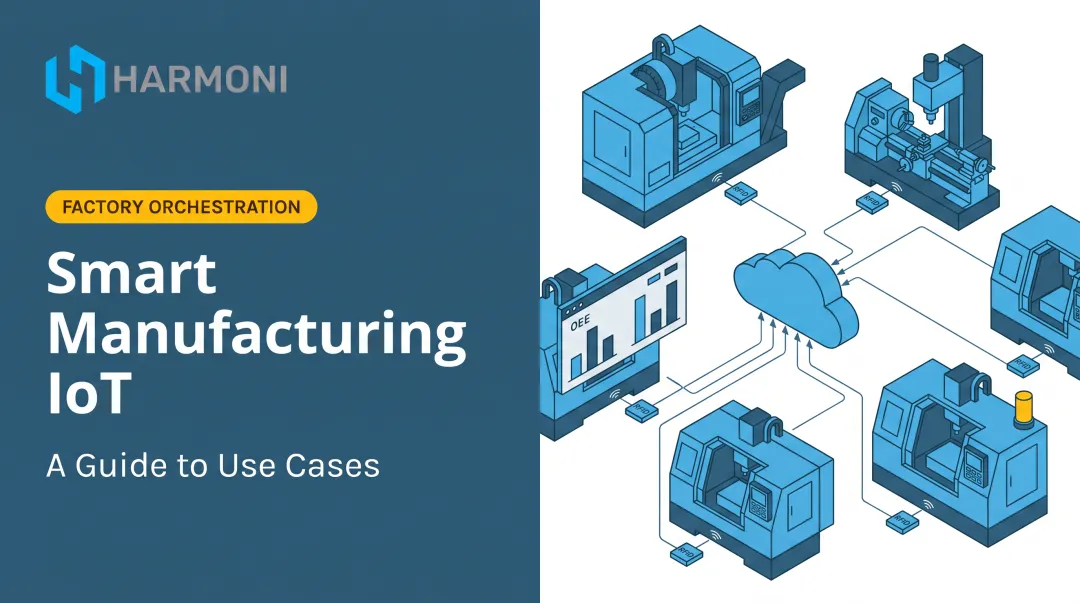
- Cloud software aggregates insights: dashboards, maps, and automated alerts pull the raw data together, frequently integrating with ERP or maintenance systems already in use.
- Businesses act on the data, triggering predictive maintenance, automating workflows, or resolving issues before they escalate into downtime or loss.

According to AWS's IoT asset tracking reference architecture, device messages get ingested, stored, and analyzed before being presented through a centralized management interface. This is the same basic pipeline most commercial platforms follow, regardless of vendor.
Core Technologies Powering IoT Asset Tracking
Not every asset needs the same tracking method. A shipping container crossing the country has different requirements than a wrench sitting in a tool crib. Choosing the right technology comes down to asset mobility, environment, and how often you need updates.
GPS and Cellular Connectivity
GPS combined with cellular connectivity is the go-to choice for long-range, mobile assets like delivery trucks, trailers, and in-transit shipments. Geotab notes GPS precision lands around 2-5 meters under open-sky conditions, though buildings and urban canyons degrade accuracy. It's the right fit whenever an asset needs to be located across wide geographic areas in near real time.
RFID (Radio-Frequency Identification)
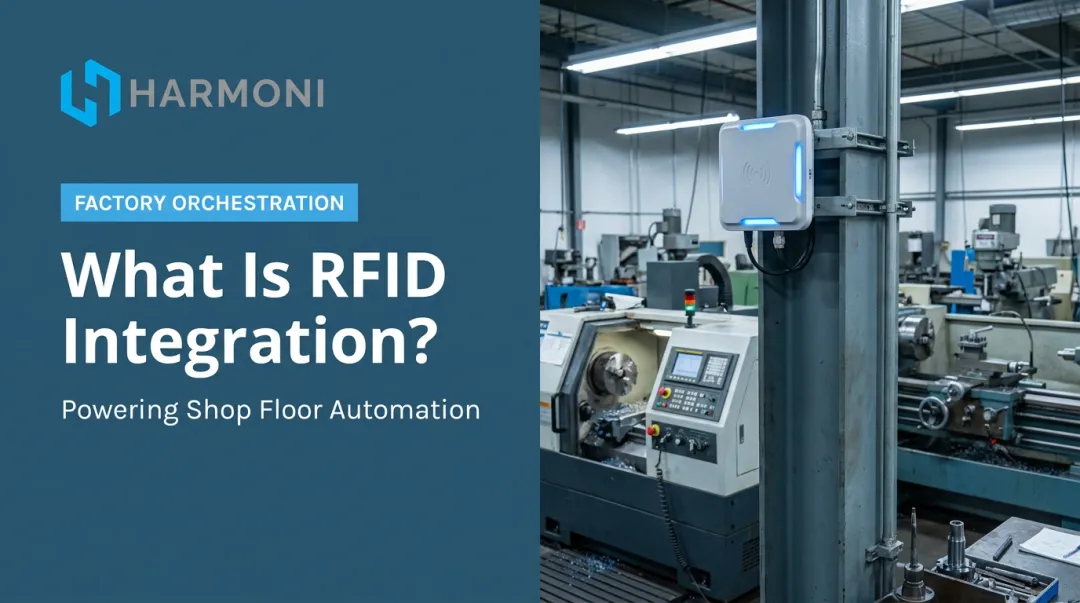
RFID tags are cheap, durable, and don't need active power management , making them ideal for fixed-checkpoint scanning in warehouses and on production floors. Passive RFID tags carry no battery at all, and Zebra reports basic passive tags can last 20+ years. Active RFID tags, which include a battery, typically run anywhere from one year to a decade depending on transmission frequency.
Bluetooth Low Energy (BLE)
BLE shines for short-range, indoor tracking within a defined facility. Power draw is low enough that beacons can run for months or years on a coin-cell battery. In typical indoor deployments, BLE achieves sub-meter positioning with beacon spacing of roughly 10 meters.
LPWAN (LTE-M, NB-IoT)
Low-power wide-area networks solve a specific problem: tracking assets that leave the building but still need long battery life. GSMA reports both LTE-M and NB-IoT can support 10+ years of battery life for many use cases, though actual longevity depends heavily on reporting frequency and coverage conditions.
NFC (Near Field Communication)
NFC is easy to confuse with RFID, but it's built for a different job. Where RFID can read tags several meters away, NFC operates at roughly 2 centimeters, making it purpose-built for deliberate, tap-to-verify interactions — think maintenance check-ins or identity confirmation, not continuous tracking.

Top Benefits of IoT Asset Tracking
The technology only matters if it produces results. Here's where IoT asset tracking pays off:
- Real-time location visibility: continuous tracking of mobile and stationary assets prevents loss, theft, and shipment delays before they become expensive problems
- Condition monitoring: sensors tracking temperature, humidity, shock, and vibration protect sensitive goods and trigger alerts before damage occurs, not after
- Predictive maintenance: usage and performance data flag wear before failure. One McKinsey analytics-based maintenance case produced an 18-25% reduction in maintenance costs
- Reduced manual labor: automated check-ins and inventory counts cut administrative overhead and eliminate the errors that come with manual data entry
- Enhanced security: geofencing, tamper detection, and remote lockout deter misuse and speed up recovery when something does go missing
- Scalability and analytics: deployments scale from dozens to thousands of assets, and historical data starts revealing utilization patterns and bottlenecks you couldn't see before
That loss-prevention benefit isn't theoretical. A 2026 Samsara and Wakefield Research survey of more than 1,500 finance leaders found organizations using asset trackers reported 76% lower average annual operational costs tied to missing assets, and were twice as likely to recover stolen equipment within five days.
These figures come from self-reported survey data, not a controlled trial, so treat them as a directional benchmark rather than a guarantee.
IoT Asset Tracking Use Cases Across Industries
Different industries lean on different combinations of the technologies above. A few patterns stand out.
Logistics and cold chain. Shipping containers and pallets get tracked for both location and temperature, protecting perishables and pharmaceuticals in transit. Vodafone and Controlant reported over 99.9% successful delivery using reusable environmental loggers with real-time intervention alerts on pharmaceutical shipments.
Retail and inventory. Smart shelves and RFID tags keep stock counts accurate across fulfillment centers and store floors. The National Retail Federation notes item-level RFID can push inventory tracking accuracy to close to 99%, dramatically speeding up cycle counts and cutting stockouts.
Fleet and vehicle management. GPS trackers optimize delivery routes, monitor fuel usage, and flag maintenance needs before a breakdown strands a truck. One documented fleet of nearly 50 trucks cut fuel purchases by 109 gallons per driver per month after adding GPS tracking, even as total miles driven stayed flat.
Healthcare and facilities. Hospitals track high-value mobile equipment like IV pumps and wheelchairs so staff aren't wasting shift time hunting for gear. One hospital cut pump-search time from 23 minutes down to under 5, while utilization rates climbed from roughly 50% to nearly 80%.
Beyond Location Tracking: IoT Asset Visibility on the Manufacturing Floor
In CNC machining, aerospace, and precision manufacturing environments, "where is it" isn't enough. Knowing a machine's physical location does nothing if you don't know whether it's running the right job, staffed correctly, or producing in-spec parts right now.
This is where factory orchestration platforms take the asset tracking concept several layers deeper.
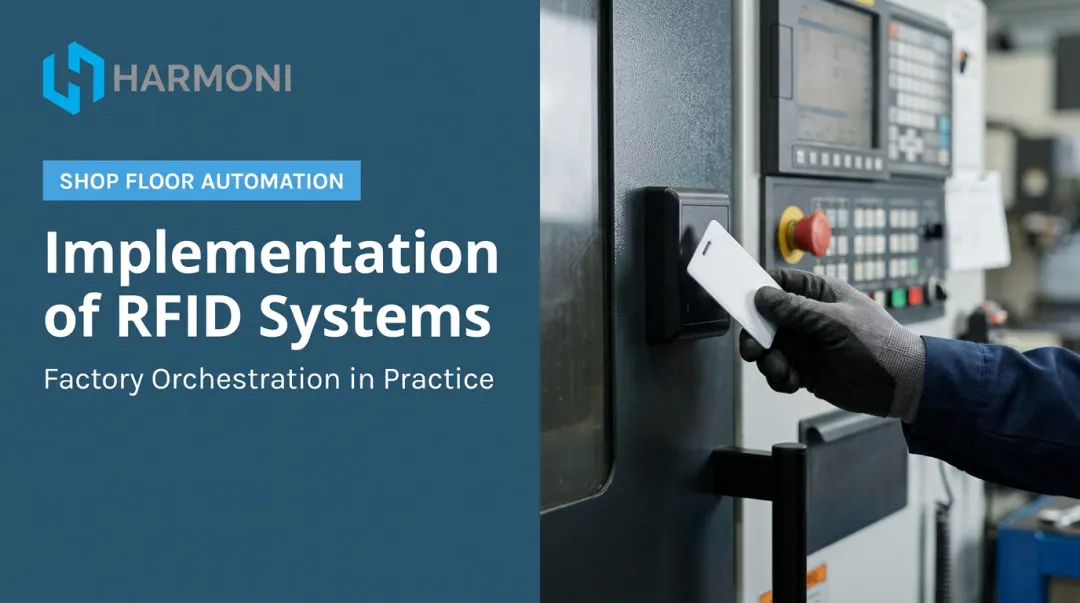
Harmoni, built specifically for CNC job shops and precision manufacturers, applies RFID identification not just to locate assets but to automatically detect nearby employees and active jobs at each workcenter. When an operator badges in, the system identifies both the person and the job, then automatically loads the correct CNC program, settings, and offsets without anyone touching a keypad.

That single workflow does three things basic asset tracking never could:
- Labor visibility: At WessDel, a manual time-tracking process consuming 11 minutes per transaction dropped to mere seconds, recovering 17 productive hours per employee per month.
- Accurate job costing: Automated employee-to-job association removes the data lag and entry errors that distort cost records, earning WessDel a 5X return on its platform investment.
- Error prevention: Tying the correct program to the correct job revision, backed by digital checksheets and automated work instructions, helped WessDel cut delinquent jobs by 10% and reduce overtime.
Machine data, operator activity, and ERP workflows converge into one real-time view. This extends the basic promise of asset tracking (knowing where it is) into what manufacturers actually need: knowing what's happening, right now, at every workcenter.
Manufacturers curious about this deeper layer of shop floor visibility can request a Harmoni demo to see it applied to their own equipment and ERP setup.
Frequently Asked Questions
What is asset monitoring in IoT?
Asset monitoring uses connected sensors to continuously observe an asset's location, condition, and performance. That data feeds into a central system, where it's analyzed and turned into alerts or actions.
What are cloud services for IoT?
IoT cloud services aggregate, store, and process data transmitted from connected devices. They power real-time dashboards and automated alerts, enabling deeper analytics without requiring businesses to build on-premise infrastructure.
What's the difference between RFID and GPS asset tracking?
RFID is low-cost and built for fixed-checkpoint indoor scanning, like a dock door or tool crib. GPS suits continuous, long-range tracking of mobile assets like vehicles and in-transit shipments.
How much does it cost to implement IoT asset tracking?
Costs vary based on tag type and deployment scale: passive RFID inlays start around $0.07-$0.15, while active sensor tags can exceed $100. Weigh the upfront cost against long-term ROI from reduced loss and downtime.
Does IoT asset tracking work both indoors and outdoors?
Yes, but the right technology depends on the environment. BLE and RFID handle indoor precision well, while GPS and cellular connectivity are built for outdoor, long-range mobility.
Which industries benefit most from IoT asset tracking?
Logistics, retail, healthcare, and manufacturing lead adoption due to high asset volume, mobility, and value at risk. Each industry applies a slightly different mix of tracking technologies based on its specific needs.