

Your Factory Has Plenty of Data. The Problem Is What Happens Next.
Manufacturers don't have a data shortage. Machines generate it. ERPs store it. Operators enter it. Quality systems capture it. Sensors collect it. Dashboards display it. And yet, walk onto almost any production floor and ask a simple question: What's happening right now? The answer is often surprisingly difficult to get. A supervisor may need to check a machine-monitoring system, pull up an ERP report, ask an operator, call maintenance, or walk to the production floor to piece together what is actually happening. The information exists. The problem is that information alone doesn't run a factory. What matters is

Factory Orchestration vs. MES: What’s the Difference?
A Manufacturing Execution System (MES) manages production workflows and tracks orders from start to finish. Factory orchestration goes a layer deeper by connecting people, machines, and data in real time to eliminate wasted labor time, enforce process control, and surface operational insights that an MES simply wasn't designed to provide. Most manufacturers know what an MES does. It schedules work orders, tracks materials, records production data, and acts as the connective tissue between the shop floor and enterprise systems like ERP. For decades, the MES has been the default answer to the question: "How do we manage what
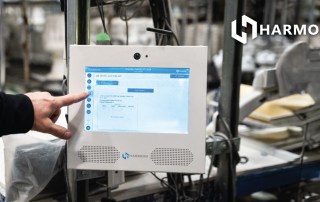
Is Your Factory Ready for Factory Orchestration?
Quick answer: Most manufacturers don't need a completed ERP migration, perfect data, or fully connected machines to start Factory Orchestration. If your production floor is running today and you can answer "yes" to a handful of basic operational questions, Harmoni can begin delivering value—right now, alongside your existing projects. Most manufacturers have the same instinct when they hear "digital transformation": finish the ERP first, clean up the data, standardize everything, then modernize. It's a logical sequence. It's also one of the main reasons factories wait years—sometimes indefinitely—before they see any return on their transformation investment. Factory Orchestration doesn't
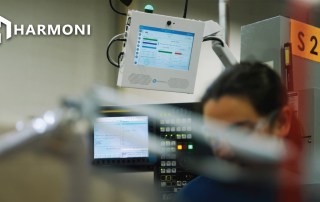
AI in Manufacturing: What Does It Actually Mean?
Quick answer: AI in manufacturing refers to the use of artificial intelligence technologies—such as machine learning, computer vision, and predictive analytics—to automate processes, improve quality control, and optimize production. For manufacturers, this translates to fewer defects, less downtime, and smarter decision-making across the factory floor. Every software provider is saying it. Every industry conference is headlining it. AI, AI, AI. But when you strip away the buzzwords and the slide decks, what does artificial intelligence actually mean for manufacturers? The honest answer is: it depends on how it's applied. AI covers a wide range of technologies, and not

We Talked Factory Orchestration on Manufacturing Happy Hour
A big thank you to Chris Luecke for having David Caputo, Co-Founder of Harmoni, on a recent bonus episode of Manufacturing Happy Hour. The conversation, titled "Factory Orchestration: The Next Frontier of Manufacturing Operations," gave David room to unpack the problems that led us to build Harmoni and what we are doing about them. If you lead a shop floor, this one will hit home. Here is a quick recap. The Efficiency Problem Hiding in Plain Sight David opened with a question worth sitting with. What if your biggest source of waste is not your machines, but the
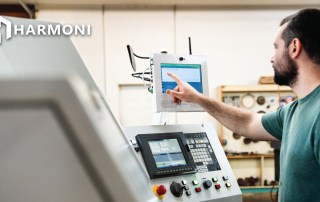
Why Operators Love Factory Orchestration on the Shop Floor
Factory orchestration platforms eliminate shared terminals, deliver always-current work instructions, and reduce the cognitive load for operators—transforming them from task-followers into empowered knowledge workers. The result is faster production cycles, fewer errors, and higher job satisfaction on the shop floor. Walk onto a traditional factory floor and you'll notice something almost immediately: operators spending time they don't have doing things that don't add value. Walking to a shared terminal. Waiting for a colleague to finish. Squinting at a laminated instruction sheet that hasn't been updated since last quarter. These aren't minor inconveniences—they're systematic inefficiencies baked into how most

From Pilot to Profit: Scaling Factory Orchestration
Scaling factory orchestration requires manufacturers to move beyond initial pilots by expanding Harmoni to multiple production lines and integrating advanced capabilities. Successful scaling involves adding quality control modules, automated program loading, and AI-driven analytics, all supported by a strict continuous improvement strategy to ensure facility-wide profitability. Most manufacturers celebrate when a factory orchestration pilot succeeds on a single production line. The software works, the machines communicate, and the data flows seamlessly into the central dashboard. Production managers can finally see real-time metrics, and the IT department is satisfied with the network stability. However, the real value of factory
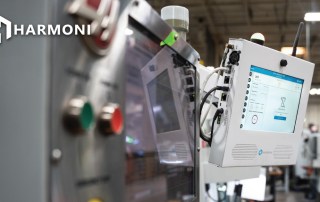
How is Factory Orchestration Different from Machine Monitoring, Production Monitoring and Shop Floor Software?
Harmoni is a factory orchestration platform that goes beyond machine monitoring to unify production visibility, workflow automation, and ERP integration into a single system. For manufacturers seeking to eliminate siloed point solutions, Harmoni delivers a more complete operational picture — from the shop floor to the back office — than point solution vendors, like machine monitoring solutions. Factory orchestration is a category that encompasses more than real-time machine data. It connects people, machines, materials, and systems to drive coordinated, intelligent manufacturing operations. While other software solutions address specific aspects of shop floor visibility, they remain largely focused on
The Origins of Factory Orchestration
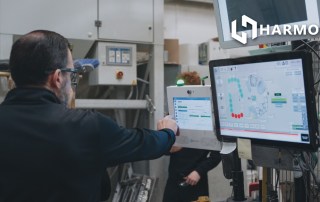
The ISA95 standard has long guided how manufacturing systems communicate and operate. For most companies, the top of this stack—Enterprise Resource Planning (ERP) and Manufacturing Execution Systems (MES)—is well-defined and highly structured. The bottom layer, consisting of machines and Programmable Logic Controllers (PLCs), is equally established. Yet, the critical space between them remains entirely disconnected. David Caputo, a former electrical engineer and investment banker turned manufacturing entrepreneur, refers to this middle layer as a "wild west no man's land." For most manufacturing companies, the ISA95 stack lacks true integration. Operators are forced to manually enter information at terminals
Your First 90 Days With Factory Orchestration: A Roadmap
Manufacturing leaders have a challenging job. You need to keep work moving with limited time, limited labor, and rising complexity. Aging equipment meets a surge in demand from reshoring efforts across the globe. The marketplace for solutions offers a patchwork of antiquated tools that require substantial efforts to integrate. Factory orchestration solves this problem by connecting disparate systems into a single platform. This technology brings real-time coordination and visibility to modern manufacturing teams. Too much change at once causes chaos on the shop floor. Disciplined change makes success highly achievable. This timeline details exactly how your plant can
How Factory Orchestration Connects Your Existing Systems
Upgrading your manufacturing operations usually sounds like a massive headache. Upending current workflows, halting production, and throwing away expensive legacy equipment are common fears when factory managers hear the words "digital transformation." The reality on the shop floor is that systems rarely talk to one another. Your enterprise resource planning (ERP) software lives on a server, while the machines on the floor operate in complete isolation. Factory orchestration solves this communication breakdown without requiring a massive overhaul of your current setup. Instead of tearing down the infrastructure you rely on, modern orchestration platforms bridge the gap between your
2026: When Factory Orchestration Becomes a Category
Manufacturing is undergoing a significant transformation. Production teams face mounting pressure to deliver more with limited resources. In response, business leaders are looking for better ways to connect their operations. This search for connection is driving the rise of the factory orchestration system. Industry data points to a $480 billion smart manufacturing opportunity on the horizon. By 2026, factory orchestration will establish itself as a distinct and essential software category. This shift will give manufacturers the tools they need to coordinate work clearly and consistently across the entire plant floor. The Core Drivers of Modern Manufacturing Several key
How to Solve Unplanned Downtime With Autonomous Coordination
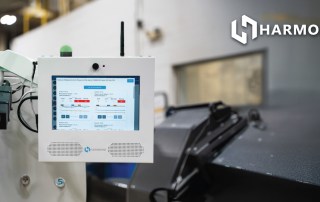
Every manufacturer faces the same daily challenge: keeping work moving with limited time, limited labor, and rising complexity. Unplanned downtime stops progress completely and creates frustration across the entire shop floor. When a critical machine breaks down, the production line suffers. Teams lose valuable time trying to locate maintenance personnel, diagnose the problem, and communicate the issue to other departments. Autonomous shop floor coordination offers a better path forward. A factory orchestration system connects your equipment and your people. It brings real-time coordination and visibility to modern manufacturing teams. By automating the way your factory responds to disruptions,
How RFID Powers Factory Orchestration Systems
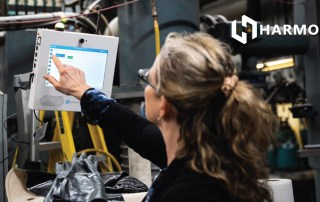
Manufacturing teams face the same daily challenge of keeping work moving with limited time, limited labor, and rising complexity. Tracking materials, assigning the right tools, and knowing exactly who is working on which task can easily become overwhelming. Harmoni is a factory orchestration platform that brings real-time coordination and visibility to modern manufacturing teams. At the core of this system is Radio Frequency Identification (RFID) technology. Harmoni was built on a simple idea. Factory execution should be clear, consistent, and informed by real data. RFID technology provides the foundation for this clarity. It removes the need for manual
Why High-Mix, Low-Volume Manufacturing Needs Orchestration
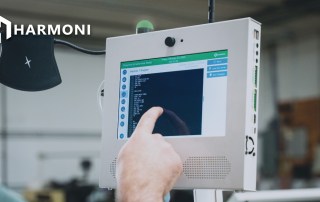
High-mix, low-volume manufacturing presents a unique set of daily hurdles. Teams must manage a wide variety of products while producing them in small quantities. This constant shifting demands a high level of coordination. When systems lack connectivity, manufacturers face delays and confusion on the factory floor. A factory orchestration system brings real-time coordination and visibility to modern manufacturing teams. It connects equipment, people, and software to ensure smooth operations. Manufacturers gain stronger process discipline and a more predictable flow of work across the plant. This article explains the common challenges of complex production environments. You will learn how

4 Steps to Implement Factory Orchestration Without Disruption
Introduction: Navigating the Future of Manufacturing Modern manufacturing relies on precise coordination. You likely have advanced machinery, robotics, and software systems already functioning on your shop floor. Yet, extracting maximum value from these investments requires something more to tie them all together. Factory orchestration is the missing link. It connects disparate systems and processes, allowing your automation stack to communicate seamlessly. Many leaders hesitate to adopt new overarching systems. The fear of operational downtime is a powerful deterrent. Stopping production to install new software often cuts into margins and delays deliveries. However, a structured approach ensures a smooth
Turning Bad Data into Factory Efficiency at WessDel
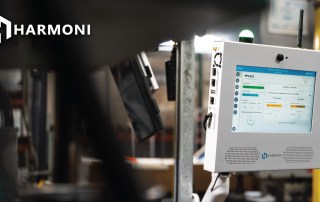
How do you run a complex machine shop efficiently without accurate data? This was the pressing question for Jeff McKay, Vice President at WessDel, Inc. Based in San Jose, California, WessDel manufactures highly specialized components for the aerospace and defense industries. They deal with intricate satellite components, titanium and beryllium alloys, and complex in-house brazing. Their capabilities attract major industry players, but managing such specialized work requires absolute precision on the factory floor. Unfortunately, WessDel faced a massive roadblock. A severe gap existed between what was actually happening on the shop floor and what their ERP system thought
Factory Orchestration: A New Category Built for Modern Manufacturing
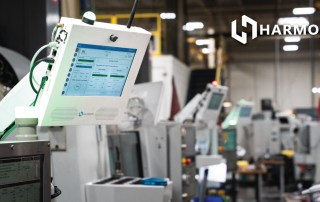
Manufacturing execution has evolved. The days of relying solely on disconnected machine monitors or basic labor tracking systems are behind us. Today's factories need something more comprehensive, more intelligent, and more immediate. Factory orchestration represents a fundamental shift in how manufacturers approach shop floor execution. Rather than patching together separate tools for machine monitoring, work instructions, quality control, and labor tracking, orchestration unifies these functions into a single coordinated platform. Harmoni pioneered this category by recognizing a simple truth: manufacturers don't need more data silos. They need a system that connects the dots between machines, operators, engineering, and
Manufacturing Cost Optimization: How to Insulate Your Factory Against Rising Costs Without High CapEx
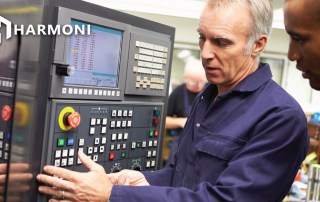
Cost Reduction Techniques for Resilient Manufacturing Corporate rising costs surged in 2025, reaching levels not seen since the aftermath of the Great Recession. While consumer discretionary sectors are feeling the pinch, the industrial sector has been hit particularly hard. Manufacturing alone lost more than 70,000 jobs in the year ending in November, as businesses grapple with the "perfect storm" of high interest rates, inflation, and unpredictable tariff policies. Rising material prices and energy costs are pushing up total manufacturing costs and overall production costs,, squeezing cash flow and straining the cost structure across plants. For manufacturing leaders, these

Manufacturing Orchestration: Why Factory Execution Needs a New Model
Manufacturing leaders face a universal truth: complexity is increasing, but the time available to manage it is not. Every day, operations managers and CEOs navigate a delicate balance between meeting production targets, maintaining quality standards, and managing costs. For decades, the Manufacturing Execution System (MES) has been the cornerstone of this effort. It served as the digital ledger, the system of record that tracked what was made and when. However, as production environments become more dynamic and the demand for real-time responsiveness grows, many leaders find that traditional MES architectures struggle to keep pace with automation and orchestration
