October 20, 2026
How to Track Labor Against Jobs Without Making Operators Hate the System
Read More
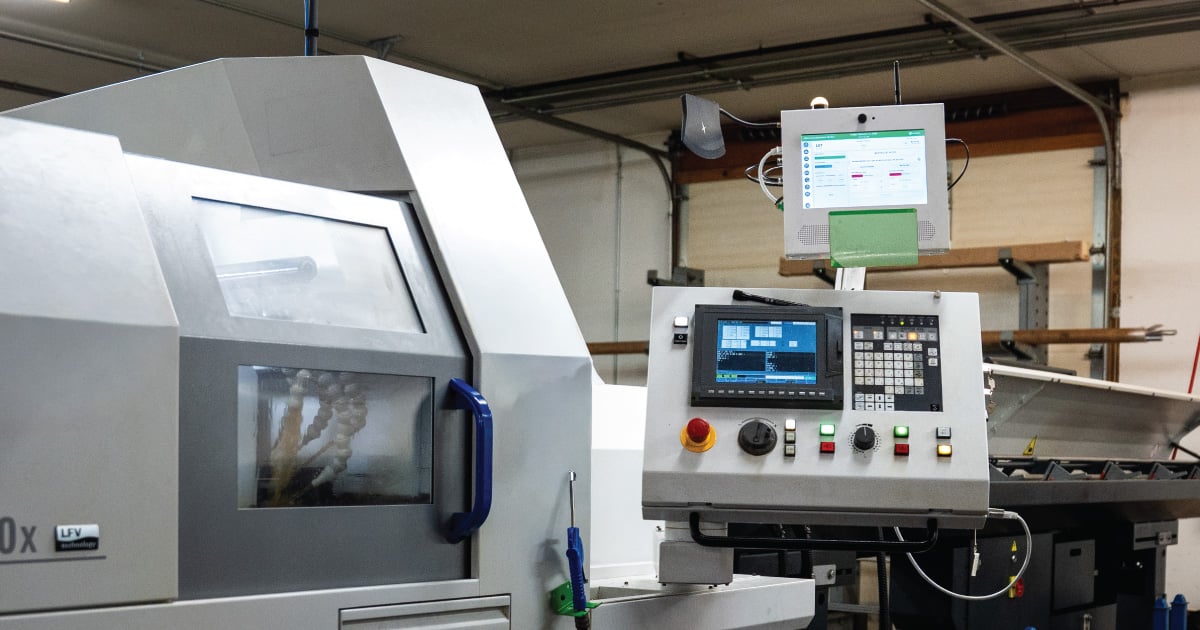
Scaling factory orchestration requires manufacturers to move beyond initial pilots by expanding Harmoni to multiple production lines and integrating advanced capabilities. Successful scaling involves adding quality control modules, automated program loading, and AI-driven analytics, all supported by a strict continuous improvement strategy to ensure facility-wide profitability.
Most manufacturers celebrate when a factory orchestration pilot succeeds on a single production line. The software works, the machines communicate, and the data flows seamlessly into the central dashboard. Production managers can finally see real-time metrics, and the IT department is satisfied with the network stability. However, the real value of factory orchestration emerges during the scaling phase. Expanding this digital infrastructure across the entire manufacturing floor transforms isolated wins into facility-wide profitability.
The challenge to continuing the momentum lies in adapting the system to handle varied equipment, complex workflows, and a massive increase in data volume. A pilot program usually operates in a controlled environment with dedicated resources. Moving that system into the messy, dynamic reality of full-scale production requires careful planning and robust change management.
Scaling factory orchestration requires a deliberate strategy. Facility managers must expand coverage systematically, integrate new capabilities, and foster a culture of continuous improvement to ensure long-term operational success. By treating the pilot as a foundation rather than a finish line, organizations can unlock unprecedented levels of efficiency and agility.
Expanding a factory orchestration system requires a standardized rollout framework. Manufacturers cannot simply copy and paste the pilot configuration onto new lines, because every production area has unique characteristics.
Start by mapping the hardware and network requirements of your lines. Identify the differences between the successful pilot line and the new targets (e.g., the pilot line used modern computer numerical control (CNC) machines, but the next line uses legacy equipment).
Standardize your data models early in the expansion process. Consistent naming conventions and data structures allow the factory orchestration platform to aggregate metrics accurately across different departments. If Line A calls a specific error a “jam” and Line B calls it a “blockage,” your reporting software will struggle to provide accurate facility-wide insights.
Choose your next rollout targets based on operational readiness and potential impact. Prioritize production lines where operators are already receptive to digital tools and where machine downtime is currently causing the most financial impact. Stagger the implementation schedule so your IT and operations teams can provide adequate support during the transition. Scaling in manageable phases prevents system overloads and allows the organization to absorb the changes without disrupting ongoing production.
Once the core factory orchestration system is running reliably across multiple lines, manufacturers can activate advanced modules. Adding specialized features turns a basic data-collection tool into a comprehensive production engine.
Connecting quality control systems directly to the orchestration platform creates a closed-loop feedback cycle. Traditional manufacturing often treats quality assurance as a separate, disconnected step at the end of the line. Factory orchestration brings this process directly into the central workflow.
When a defect is detected at an automated inspection station, the factory orchestration software can immediately alert the upstream machine operators. If a cutting tool begins to wear down and produces parts out of tolerance, the system can pause the machine automatically. This rapid communication reduces scrap rates and prevents cascading production errors. Choose integrated quality control if reducing material waste and preventing rework matter more than maintaining your current manual inspection routines.
Manual program loading introduces human error and slows down production changeovers. When operators rely on USB drives or manual data entry to load machine instructions, the risk of running an outdated program version increases dramatically.
Scaling your factory orchestration platform to handle automated program loading ensures that the correct recipes or assembly instructions are sent directly to the machine over the network. When the production schedule dictates a change to a new product, the orchestration software pushes the exact specifications to the equipment instantaneously. This feature eliminates version-control errors and drastically reduces setup time, allowing manufacturers to handle smaller, more customized production runs profitably.
Artificial Intelligence (AI) algorithms thrive on the massive datasets generated by scaled factory orchestration platforms. Manufacturers use AI to transition from reactive troubleshooting to proactive optimization.
Predictive maintenance is one of the most powerful applications of AI in this context. AI models analyze continuous vibration, temperature, and power consumption data to forecast machine failures before they happen. Instead of waiting for a motor to burn out, the maintenance team receives an alert to replace a bearing during a scheduled shift change. Furthermore, AI optimizes production scheduling by adjusting workflows in real-time based on machine availability, material shortages, and urgent order priorities.
Technology alone cannot sustain factory orchestration. Manufacturers must pair their digital tools with a continuous improvement methodology, such as Lean manufacturing or Six Sigma. The software highlights inefficiencies, but human workers must take action to resolve them.
Establish a dedicated cross-functional team responsible for reviewing the orchestration data weekly. This team should include IT specialists, floor managers, maintenance technicians, and machine operators. By analyzing downtime reports and bottleneck alerts, this group can identify process adjustments that further optimize production. For example, if the data shows that a specific changeover consistently takes longer on the night shift, the team can investigate the root cause and implement standardized training.
Training remains a vital component of this continuous improvement mindset. Operators must understand how their interactions with the factory orchestration software impact the broader supply chain. When workers see the direct correlation between accurate data entry and smoother daily operations, they become active participants in the facility’s digital transformation.
Scaling factory orchestration transforms a successful pilot into a permanent competitive advantage. Manufacturers achieve this by rolling out the system systematically across multiple lines, activating advanced features like AI and automated program loading, and fostering a workforce culture that embraces continuous improvement.
Start by evaluating your current pilot program. Document the lessons learned, map out your data standardization strategy, and identify the next production line that will benefit most from digital integration. With a clear roadmap, your manufacturing facility can move from a single point of success to widespread operational excellence.
Scaling factory orchestration across a medium-to-large facility typically takes between 6 and 18 months. The exact timeline depends on the complexity of the legacy equipment, the size of the manufacturing floor, and the availability of internal resources.
The primary risks include network bandwidth overloads, siloed data structures, and resistance from machine operators. Manufacturers can mitigate these risks by upgrading their network infrastructure beforehand, standardizing data naming conventions, and involving operators early in the rollout process.
A dedicated digital transformation manager should lead the expansion, supported by a cross-functional team. This team must include representatives from operations, information technology (IT), maintenance, and quality assurance to ensure all departmental needs are met during the scale-up.
The best approach combines classroom instruction with hands-on, on-the-floor coaching. Training should focus on how the software makes the operator’s specific job easier, rather than just explaining the technical features of the platform.