
Real-Time OEE Monitoring
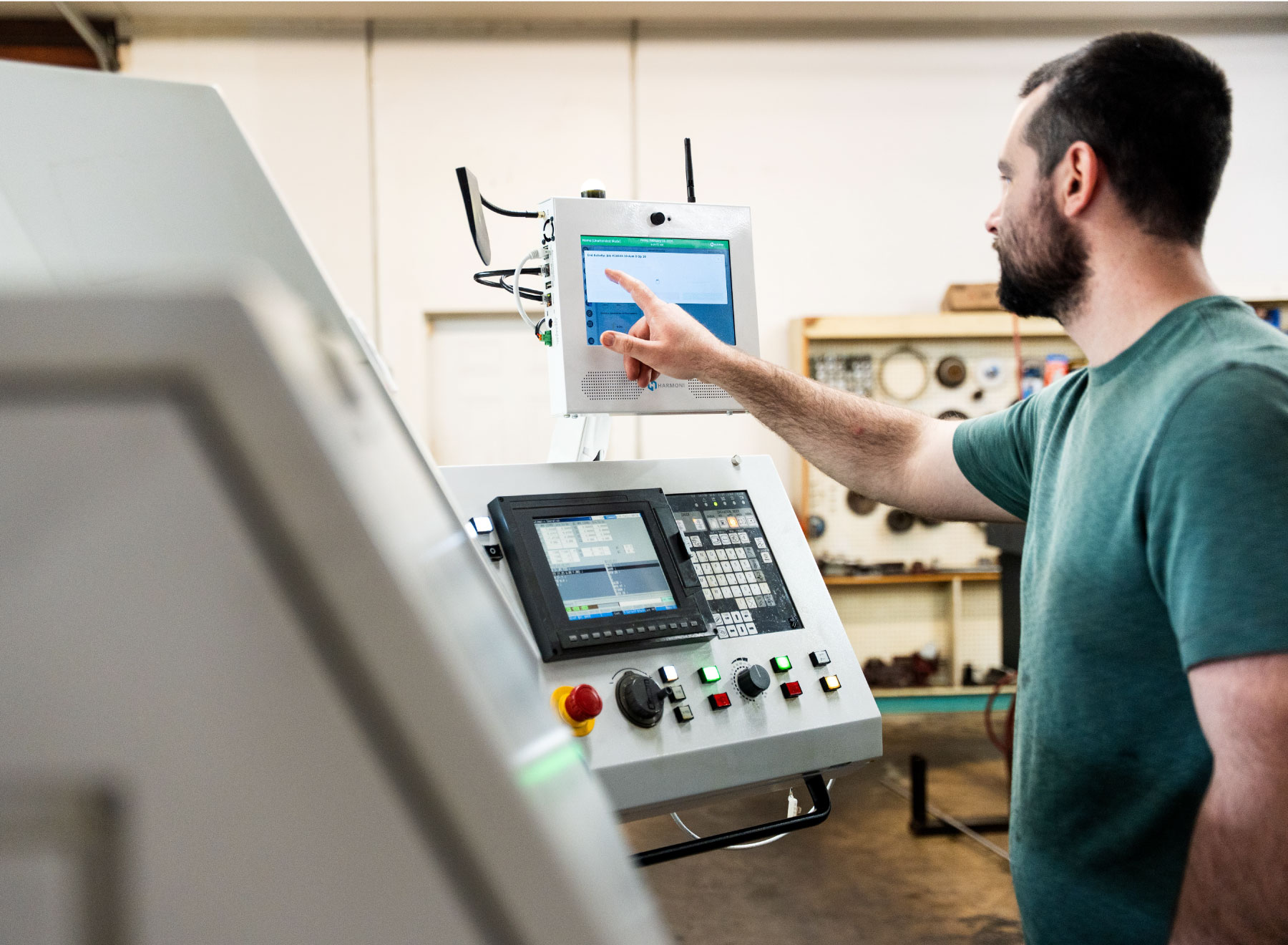
Traditionally, only certain aspects of these calculations can be fully automated. Machine data is rarely combined with ERP data in a way that shows how actual production performance compares with the way a job was quoted and planned. Harmoni automates this production data collection, acting as an OEE monitoring software and machine monitoring system — working hand-in-hand with ERP systems to provide powerful insights into your manufacturing productivity, production lines, and equipment effectiveness.
How Can Harmoni Revolutionize Real-Time OEE Monitoring in Your Factory?
Overall Equipment Effectiveness (OEE) is a measure of how well you are utilizing your manufacturing capabilities on your factory floor. Lean manufacturing focuses on eliminating waste from the production process to maximize productivity, and OEE software can help achieve these goals by enhancing productivity while minimizing waste. It combines measures of machine run time, how fast parts are being processed, and the time lost to producing scrapped parts. Measuring manufacturing productivity enables you to watch machine utilization, labor associated with your machine operators, part cost performance, quality, and other metrics that affect production efficiency and long-term success. Production performance is a key metric for assessing manufacturing efficiency and effectiveness, providing real-time insights to identify and address issues.
Machine Utilization + Labor for Production Efficiency
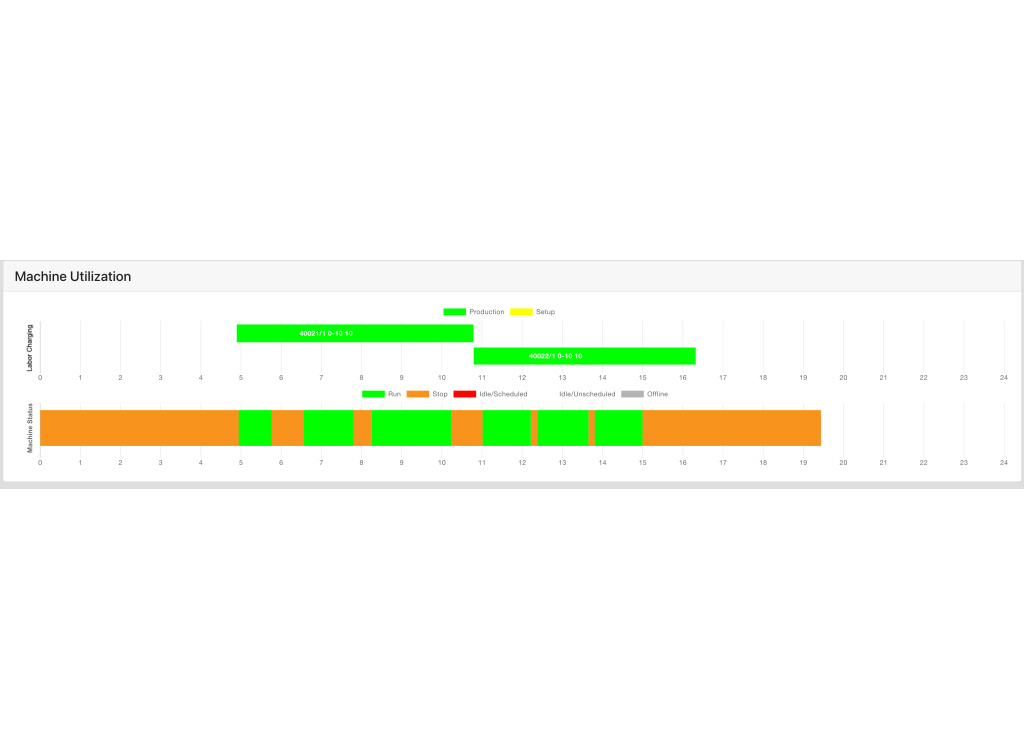
Consider the chart, available within Harmoni, both on the machine and in the web portal. Automated data collection and monitoring of the production line can provide insights into machine utilization and labor efficiency. Here, we have an operator who charged 100% of their time to two different jobs. However, you can see some insightful details when you compare the machine cycles. Why was there such a long cycle lag from 5:45 to 6:30? Why did the operator remain clocked onto the last job long after the cycles were completed? Traditional OEE may have only told you that the operator charged 100% of their time, and the machine ran 65% of the time. Perhaps enough to alert you to a condition worth investigating, but falling short of identifying the questions you should be asking.
Part Cost Performance
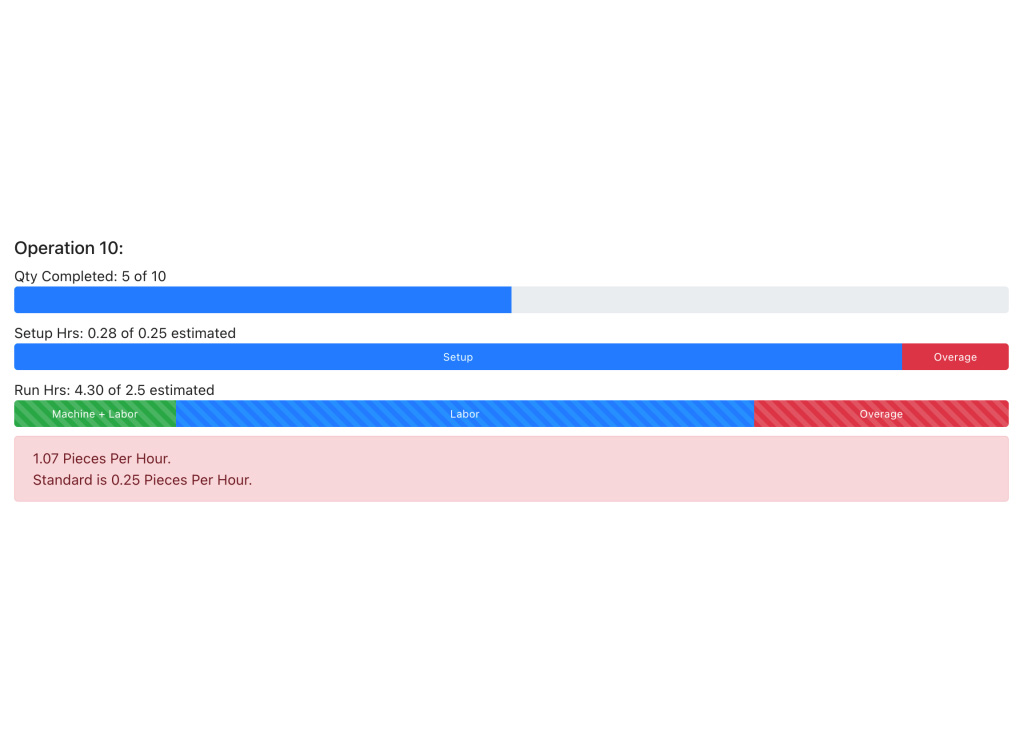
A traditional OEE score defines performance according to how fast a part can be produced. 100% performance means that you cannot possibly produce this part faster. However, that could be a challenging metric to perfect with continuous improvement in many manufacturing operations. Does the increased throughput of cycles push up scrap and machine downtime? Does quality suffer? Harmoni uses a different data point as the basis for performance – how long the cycle should have taken according to how you defined it within your ERP system. 100% performance means it took the same amount of time it was estimated to take.
Quality
You enter scrap quantities and reasons directly at the HMI with Harmoni. Not only does this data feed into your ERP system, but it also matches up to the machine cycles that we record. This is key for OEE calculations because you need to know exactly when scrap occurred to have the most accurate calculations of your manufacturing operation.

Visual Factory Indicator Light for Production Monitoring
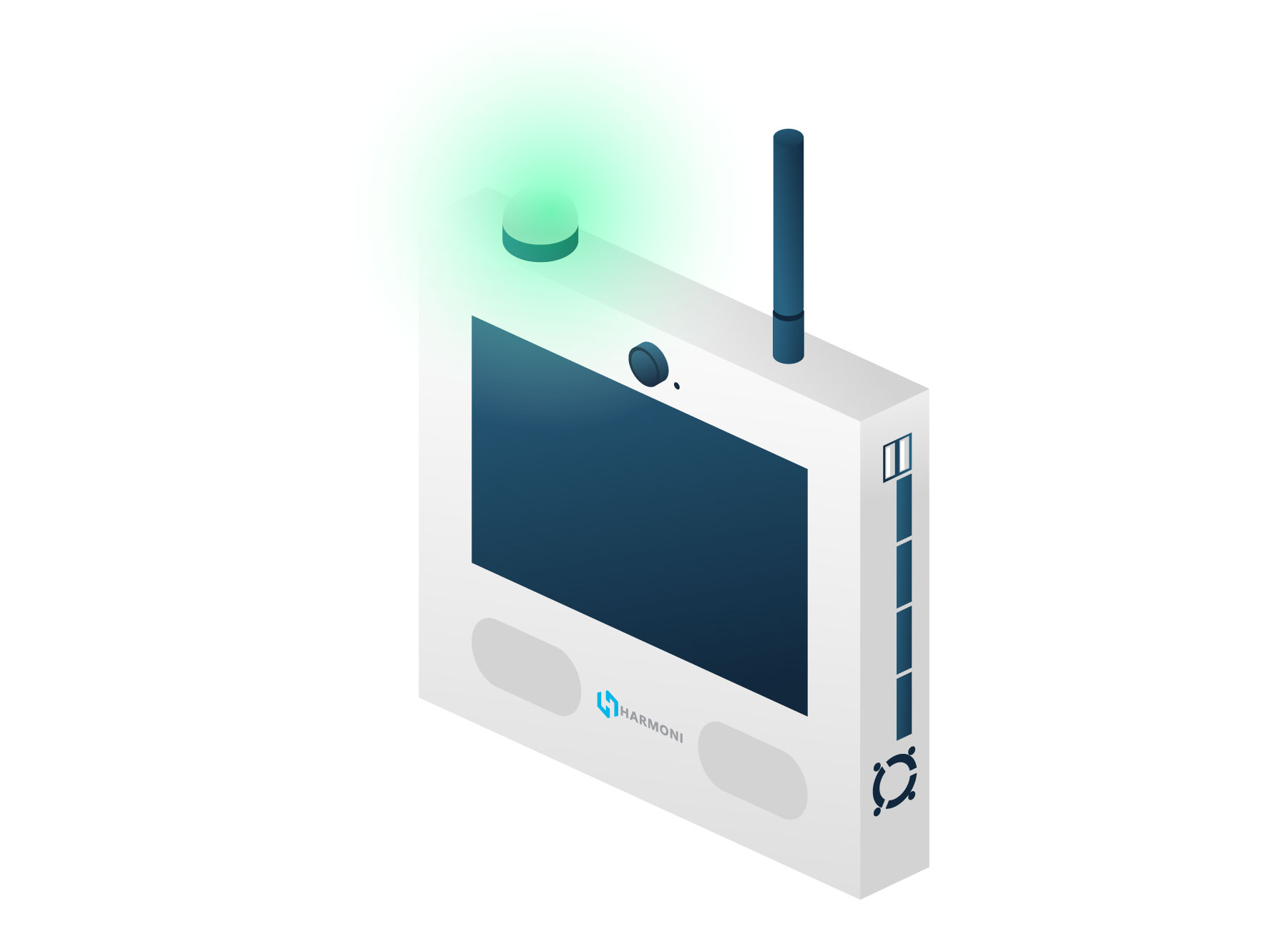
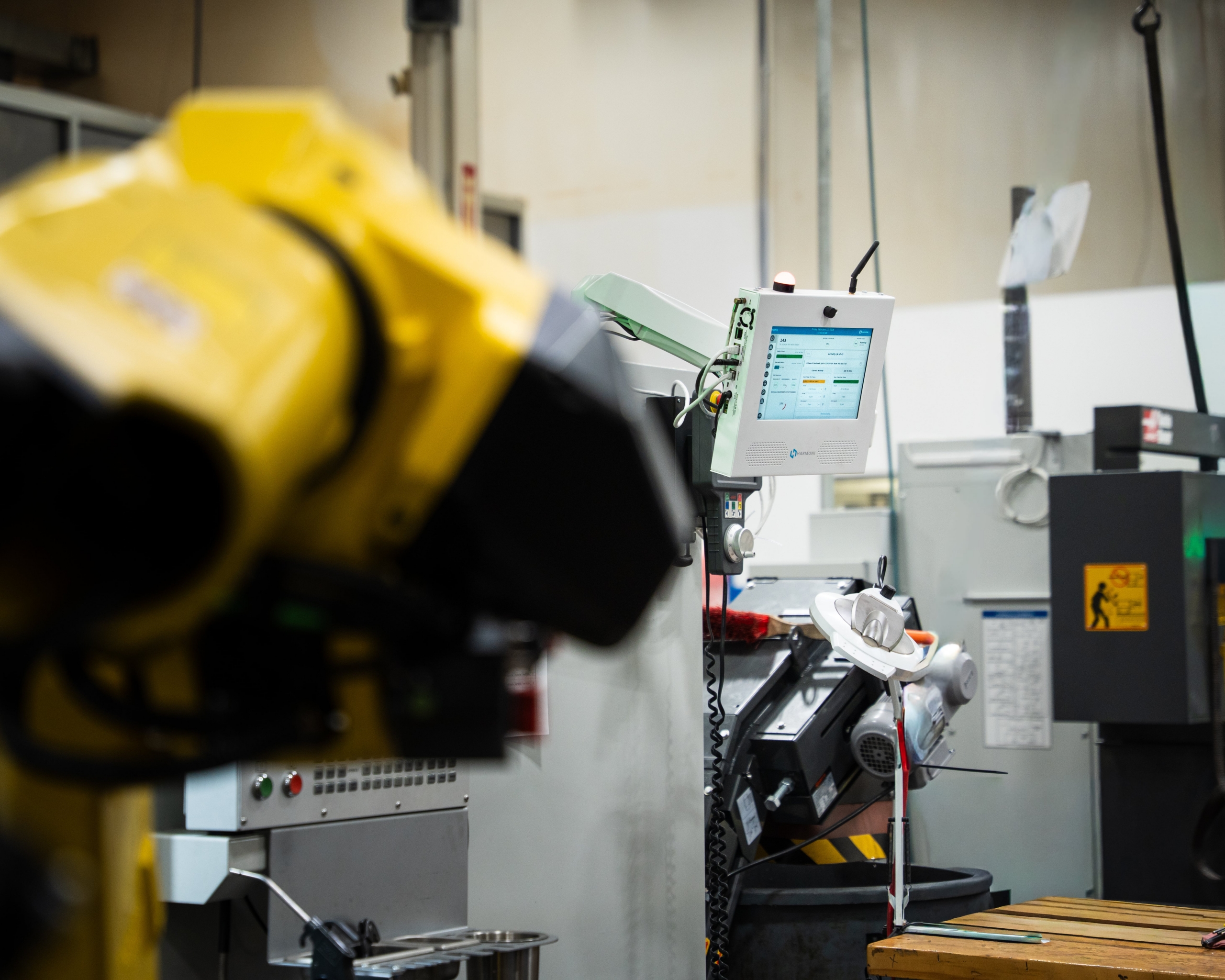
The Harmoni terminal includes an andon light that helps to communicate the OEE conditions of your machines and manufacturing equipment based on real-time data to operators and managers. This visual factory indicator light provides real-time feedback on the production process and OEE conditions. When the machine is running and within the expected performance, the indicator light will show green. As performance slips, this indicator will change from green to yellow. Poor performance will be presented with a red indicator. This sort of machine downtime monitoring and immediate manufacturing process feedback puts information in the hands of the individuals most able to impact it.