October 20, 2026
How to Track Labor Against Jobs Without Making Operators Hate the System
Read More
Factory orchestration platforms eliminate shared terminals, deliver always-current work instructions, and reduce the cognitive load for operators—transforming them from task-followers into empowered knowledge workers. The result is faster production cycles, fewer errors, and higher job satisfaction on the shop floor.
Walk onto a traditional factory floor and you’ll notice something almost immediately: operators spending time they don’t have doing things that don’t add value. Walking to a shared terminal. Waiting for a colleague to finish. Squinting at a laminated instruction sheet that hasn’t been updated since last quarter. These aren’t minor inconveniences—they’re systematic inefficiencies baked into how most factories have operated for decades.
Factory orchestration changes that. By connecting operators directly to digital workflows through personal or role-specific interfaces, orchestration platforms put the right information in the right hands at exactly the right moment. The benefits aren’t abstract; they show up immediately in how operators move, think, and work.
This post explores the operator experience on the shop floor—what changes when factories shift to orchestrated workflows, why operators respond so positively, and how these platforms are redefining what it means to be a skilled frontline worker.
Factory orchestration refers to the digital coordination of tasks, instructions, and workflows across the shop floor in real time. Unlike traditional manufacturing execution systems (MES), which tend to be rigid and terminal-based, modern factory orchestration platforms are designed around the people doing the work—not just the machines or the managers above them.
For operators, this distinction is significant. Orchestration platforms don’t just digitize existing processes; they restructure how work gets delivered, tracked, and adapted. An operator no longer needs to seek out information. The information comes to them—contextualized, current, and actionable.
Shared terminals were a practical solution to a technological limitation. When deploying one screen per workstation was cost-prohibitive, a cluster of shared terminals made sense. The problem is that operators adapted their behavior around the terminal—and that adaptation costs time.
Studies on manufacturing efficiency consistently show that non-value-added movement accounts for a significant portion of operator time in traditional environments. Walking to a terminal, waiting for access, logging in, navigating menus, and walking back—this can easily consume several minutes per task sequence. Across a full shift, across an entire workforce, that adds up to thousands of lost production hours annually.
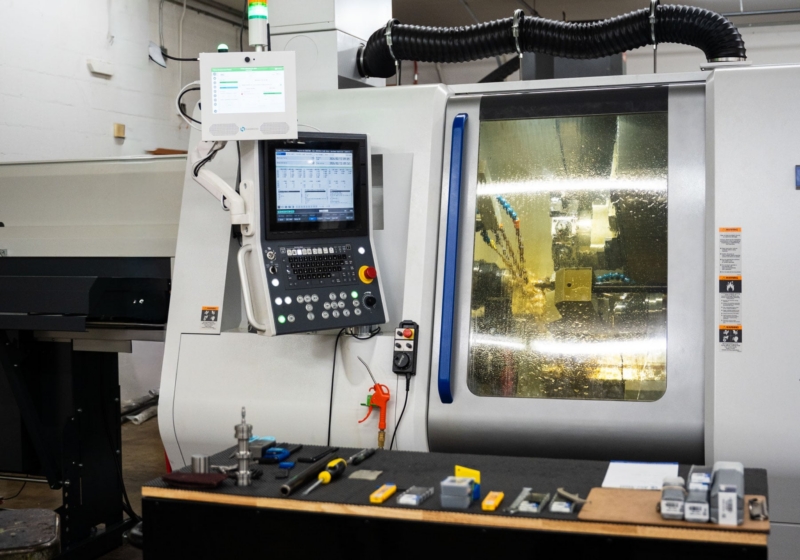
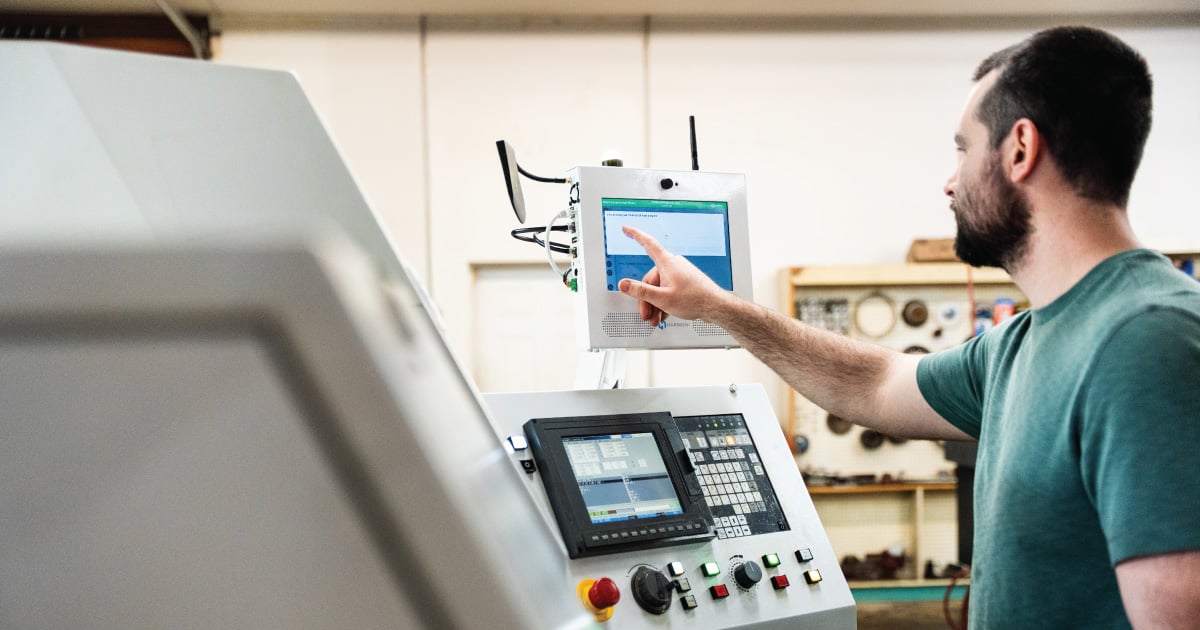
Factory orchestration platforms address this by distributing access. Operators receive their instructions directly at the point of work through Harmoni’s devices. No walking. No waiting. No bottleneck.
The efficiency gains are immediate, but the psychological effect is equally important. Operators who spend less time in transit feel more in control of their work. Their attention stays focused on the task, not on logistics.
One of the most persistent sources of error on the shop floor is outdated documentation. Printed work instructions get revised centrally but updated slowly. By the time a new version reaches every workstation, operators may have been following obsolete procedures for days—or longer.
Factory orchestration eliminates this lag entirely. When an engineer updates a work instruction, every operator sees the revised version immediately. There’s no version control problem. No ambiguity about which document is current. No risk of an operator following a process that engineering already knows is incorrect.
This matters for quality, obviously. But it also matters for confidence. Operators who trust that their instructions are current don’t have to second-guess themselves. They don’t have to flag down a supervisor to verify whether the sheet in front of them is up to date. They can focus entirely on execution—which is exactly where their attention belongs.
For manufacturers operating under ISO standards or other quality frameworks, the auditability of always-current digital instructions is an additional advantage. Every instruction is timestamped, version-controlled, and traceable.
Legacy MES interfaces were designed by engineers for engineers. Navigating them often requires training, familiarity, and a tolerance for dense, menu-heavy screens that weren’t built with frontline usability in mind.
Modern factory orchestration platforms take a different approach. User interface design is increasingly informed by the same principles behind consumer apps—clean layouts, guided workflows, and minimal cognitive friction. An operator on their first week can navigate a Harmoni interface without extensive training, because the interface anticipates what they need next and presents it clearly.
This intuitive design isn’t cosmetic. Cognitive ergonomics research shows that complex interfaces increase the mental load of decision-making, which in turn increases error rates and fatigue. A well-designed orchestration interface reduces the number of decisions an operator has to make to complete a task, freeing up mental capacity for quality checks, problem-solving, and situational awareness.
The best platforms also support multimedia instructions—embedded videos, annotated images, and step-by-step visual guides—that make complex assembly or quality procedures far easier to follow than text-only documentation.
Cognitive load is the total mental effort required to complete a task. High cognitive load leads to mistakes, slower performance, and fatigue that compounds over a shift. On a traditional shop floor, operators manage cognitive load through experience and memory—they learn the quirks of the system and compensate for its gaps.
Factory orchestration reduces the burden operators carry in their heads by externalizing it. Instead of remembering which version of a procedure applies to which product variant, the platform surfaces the correct instruction automatically based on the active work order. Instead of mentally tracking where they are in a multi-step process, operators see a clear progress indicator. Instead of estimating whether a component meets spec, they receive embedded tolerance data or pass/fail criteria at the point of decision.
This shift from memory-based to system-supported work doesn’t de-skill operators. It redirects their skill. The experienced operator’s knowledge becomes more valuable, not less, because their cognitive resources are available for judgment calls rather than routine recall.
“Before, I was always trying to remember where I was in the process, especially after an interruption. Now the system keeps track for me. I can focus on actually doing the job well.” — Production Operator, Automotive Tier 1 Supplier
That kind of feedback is consistent across factory environments that have deployed orchestration platforms. Operators don’t experience the system as surveillance or micromanagement. They experience it as support.
The traditional view of the factory operator positions them as an executor—someone who follows instructions and reports problems upward. Factory orchestration challenges that model, and for good reason.
Orchestration platforms generate detailed data about how work actually gets done: where operators pause, which steps generate the most errors, how long each task takes relative to standard time. This data, made visible to operators and not just managers, creates opportunities for frontline workers to contribute to process improvement in ways they previously couldn’t.
Structured feedback mechanisms let operators flag unclear instructions, report near-misses, or suggest step sequence changes directly through the interface. When those suggestions are acted on—and good orchestration workflows ensure they often are—operators see their knowledge translated into process changes. That’s the definition of empowerment.
This shift has meaningful implications for workforce retention. Operators who feel that their expertise is recognized and that they have agency over their work environment are significantly more likely to stay. At a time when skilled manufacturing labor is difficult to attract and retain, the operator experience is not a secondary concern—it’s a strategic priority.
Orchestration doesn’t just improve individual operator performance—it changes how teams function. When every operator is working from the same current information, with visible task status and shared digital workflows, coordination becomes more natural.
Supervisors spend less time answering questions about what to do next, because the system answers those questions automatically. Instead, supervisors can focus on coaching, exception handling, and continuous improvement. The dynamic shifts from reactive management to proactive leadership.
Cross-training also becomes more structured. When work instructions live in the orchestration platform rather than in the heads of senior operators, knowledge transfer is systematic. A new team member can follow the same guided workflow that an experienced colleague uses—with additional detail and embedded guidance toggled on for their skill level.
Factory orchestration isn’t a single implementation event—it’s an evolving capability. The platforms that deliver the most value for operators are those that improve continuously, incorporating feedback from the shop floor and adapting to changes in production, product mix, and workforce composition.
For manufacturers considering orchestration, the operator experience should be central to the evaluation process. Involve frontline workers in platform selection and rollout. Measure success not just by cycle time and error rates, but by how operators describe their work before and after deployment.
The factories that get this right aren’t just more efficient. They’re better places to work—and in manufacturing, those two things are increasingly inseparable.
Factory orchestration is the real-time digital coordination of tasks, instructions, and workflows across the shop floor, delivered directly to operators at the point of work. Traditional MES platforms are typically terminal-based, rigid, and designed for data collection. Factory orchestration platforms are designed around the operator experience—prioritizing usability, real-time updates, and guided workflows.
Factory orchestration reduces errors by eliminating outdated documentation, providing step-by-step visual guidance, and embedding quality criteria directly into work instructions. When instructions are always current and delivered at the right moment, operators have fewer opportunities to follow incorrect or ambiguous procedures.
Most modern factory orchestration platforms are designed with intuitive, consumer-grade interfaces that require minimal training. Operators can typically begin navigating guided workflows within hours of deployment, with embedded multimedia instructions reducing reliance on supervisor support.
Factory orchestration empowers operators by giving them access to real-time information, structured feedback mechanisms, and visibility into their own performance data. When operators can flag unclear instructions or suggest improvements directly through the platform—and see those suggestions acted on—they become active contributors to process improvement rather than passive executors.
Yes. While large manufacturers were early adopters, factory orchestration platforms are increasingly accessible to smaller operations. The scalability of cloud-based platforms means manufacturers can start with a subset of workstations or product lines and expand as the business case is proven on the shop floor.
Operators who work within well-designed orchestration environments consistently report higher job satisfaction—primarily because the cognitive burden of their work is reduced and their expertise is recognized. Manufacturers that prioritize the operator experience through orchestration report lower turnover and stronger performance from newer team members who onboard more quickly.