October 20, 2026
How to Track Labor Against Jobs Without Making Operators Hate the System
Read More
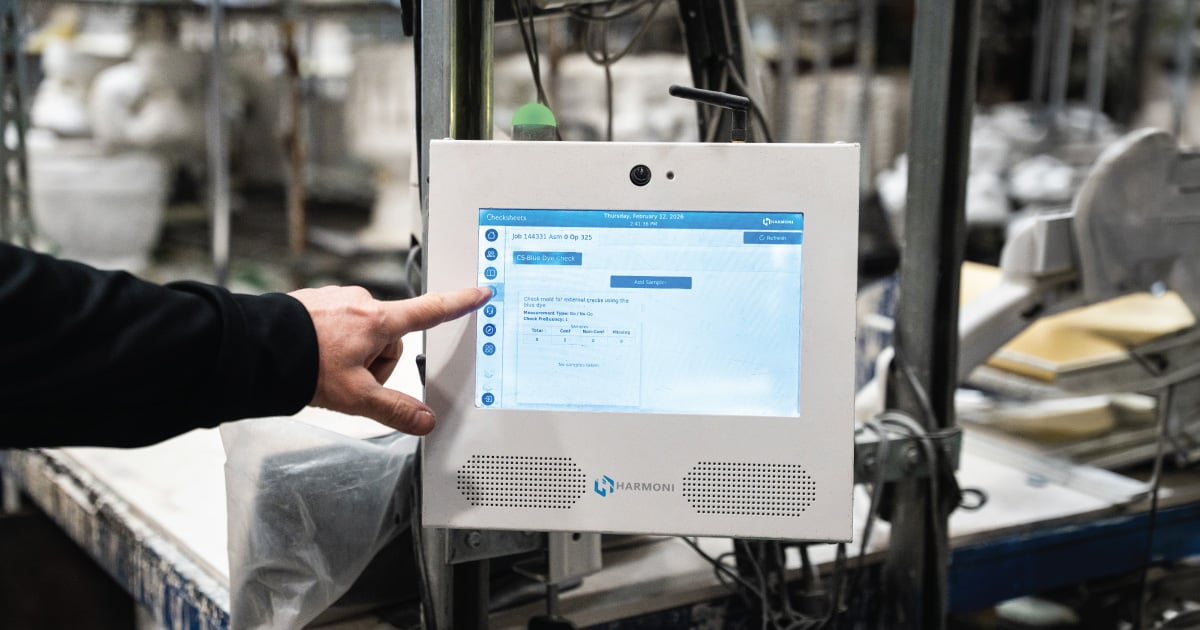
Quick answer: Most manufacturers don’t need a completed ERP migration, perfect data, or fully connected machines to start Factory Orchestration. If your production floor is running today and you can answer “yes” to a handful of basic operational questions, Harmoni can begin delivering value—right now, alongside your existing projects.
Most manufacturers have the same instinct when they hear “digital transformation”: finish the ERP first, clean up the data, standardize everything, then modernize. It’s a logical sequence. It’s also one of the main reasons factories wait years—sometimes indefinitely—before they see any return on their transformation investment.
Factory Orchestration doesn’t require a perfect starting point. What it requires is a production floor that’s running, some form of digital data (even basic), and a few persistent operational problems worth solving. If you have those three things, you’re closer to ready than you think.
This checklist-based guide walks through the real prerequisites for Factory Orchestration, helps you assess your current readiness across operations, data, and infrastructure, and shows you how platforms like Harmoni can run in parallel with the projects already underway in your facility. At the end, you’ll find a downloadable version of the full Factory Readiness Checklist to share with your team.
Before getting into what readiness looks like, it’s worth clearing up what it doesn’t look like. Many manufacturers hold off on Factory Orchestration because they’re waiting on one or more of the following:
❌ A completed ERP migration
❌ Perfect master data
❌ Every machine connected to the network
❌ Fully standardized processes across every line
❌ A “lights out” smart factory vision
❌ AI use cases already scoped and defined
None of these are prerequisites. If your production floor is operating today—even with manual processes, paper-based tracking, or a patchwork of legacy systems—Harmoni can begin identifying and delivering value. The goal isn’t to wait for perfection. The goal is to start building the operational foundation that makes everything else work better.
Use the following four areas to evaluate where your factory stands. Each “yes” answer moves you closer to being ready for a phased Factory Orchestration implementation.
| Question | Yes | No |
| Do you have repeatable production processes? | ☐ | ☐ |
| Are jobs scheduled electronically? | ☐ | ☐ |
| Are work orders digitally available? | ☐ | ☐ |
| Do operators follow documented work instructions? | ☐ | ☐ |
Scoring: Two or more “yes” answers in this section typically signals that your operations are ready to begin.
| Question | Yes | No |
| Can you export production orders from your ERP? | ☐ | ☐ |
| Do machines produce any digital signals? | ☐ | ☐ |
| Do you track production output, even manually? | ☐ | ☐ |
| Are part numbers managed electronically? | ☐ | ☐ |
Important: You don’t need perfect data—you need usable data. Even manual tracking, spreadsheets, or basic ERP exports give Harmoni something to work with.
| Question | Yes | No |
| Is there a stable network in your production environment? | ☐ | ☐ |
| Are PCs or tablets available on the floor? | ☐ | ☐ |
| Does your ERP or MES have API or database access? | ☐ | ☐ |
| Is there someone responsible for manufacturing systems? | ☐ | ☐ |
If your organization is experiencing any of the following, they’re a strong signal that Factory Orchestration would deliver immediate, measurable impact:
| ☐ | Labor shortages affecting output |
| ☐ | Recurring quality problems |
| ☐ | High scrap rates |
| ☐ | Late deliveries to customers |
| ☐ | Customer traceability requirements |
| ☐ | High operator turnover |
| ☐ | Processes that rely on tribal knowledge |
| ☐ | Low machine utilization |
| ☐ | Poor schedule adherence |
| ☐ | Inconsistent execution of standard work |
Three or more checked? Your organization is likely ready for Factory Orchestration—and the urgency to act is real.
Download the printable, team-ready version of this assessment and bring it to your next planning conversation.
This is the question most manufacturers don’t think to ask—and the answer changes the economics of transformation entirely. Factory Orchestration doesn’t require a frozen environment. Harmoni is specifically designed to run in parallel with ongoing transformation work.
| Existing Project | What Harmoni Can Do in Parallel |
| ERP Migration | Connect to your current ERP today; transition after migration completes |
| Database Cleanup | Start collecting clean operational data immediately |
| Machine Connectivity | Connect machines incrementally—not all at once |
| Work Instruction Standardization | Digitize and improve documents progressively |
| Process Improvement | Capture baseline performance data before changes begin |
| AI Initiatives | Build the trusted manufacturing data that AI actually needs to function |
| Lean Transformation | Provide real-time visibility into waste and bottlenecks |
| Plant Expansion | Standardize execution across new production lines from day one |
The benefit of this parallel approach is compounding. By the time an ERP migration completes or a Lean initiative matures, the operational data collected through Harmoni has already created a performance baseline—something most factories don’t have when they finally go live on a new system.
Sometimes the readiness question isn’t about technology—it’s about operational pain. If any of these sound familiar, the cost of waiting is already accumulating:
These aren’t edge cases—they’re among the most common conditions on production floors today, and they represent a steady drain on output, quality, and labor efficiency. Waiting for the right moment to address them doesn’t make the implementation easier. It just delays the fix.
Harmoni implementations are structured to deliver early, visible results—not a multi-year rollout before anyone sees value. Here’s a typical trajectory:
Weeks 1–2: Connect systems and map existing workflows. No rip-and-replace required.
Weeks 3–4: Deliver production visibility. Leadership and floor supervisors can see what’s happening in real time.
Month 2: Digitize operator workflows. Instructions, job routing, and production context reach the floor without paper.
Month 3: Automate execution. Jobs flow through the system based on rules, priorities, and real-time conditions.
Ongoing: Layer AI capabilities on top of trusted, structured operational data—the kind that makes AI recommendations reliable and actionable.
The sequence matters. Harmoni builds from connectivity to visibility to automation to intelligence—each phase creating the foundation the next one depends on.
Add up your “yes” answers and checked business drivers across all four sections:
| Score | What It Means |
| 0–8 checks | You’re building the foundation. Harmoni can help identify the highest-impact first steps and create a path forward. |
| 9–16 checks | You’re ready for a phased implementation. There are clear opportunities to start delivering value now. |
| 17+ checks | You’re positioned to realize value quickly and scale across the factory. A readiness assessment can identify the fastest path. |
Waiting for the perfect conditions to start transformation is, paradoxically, one of the riskiest strategies a manufacturer can choose. Every quarter spent waiting is a quarter where competitors are building operational advantages, customers are raising traceability expectations, and the gap between your current state and where you need to be grows wider.
The best time to begin isn’t after every other project finishes—it’s while those projects are still running, so each one benefits from better visibility, more consistent execution, and cleaner operational data.