
Introduction to Machine Monitoring
In today’s competitive manufacturing landscape, efficiency and productivity are more critical than ever. Machine downtime, unoptimized workflows, and lack of real-time data can lead to costly inefficiencies. This is where machine monitoring comes in—a game-changing technology that enables manufacturers to track, analyze, and optimize their production equipment in real time.
Machine monitoring systems provide valuable insights into machine utilization, performance trends, and maintenance needs, allowing manufacturers to reduce waste, minimize downtime, and improve overall efficiency. Whether you’re managing a small machine shop or a large-scale production facility, implementing machine monitoring can help you make data-driven decisions that lead to higher output and reduced costs across your production processes.
What You’ll Learn in This Guide
In this comprehensive guide, we’ll cover:
- What machine monitoring is and how it works
- The key components of a machine monitoring system
- How manufacturers benefit from machine data collection
- How to implement machine monitoring in your facility
- Real-world success stories of machine monitoring in action
By the end of this article, you’ll have a solid understanding of how machine monitoring can transform your manufacturing operations and help you stay ahead in an increasingly digital industry.
Table of Contents
- What is Machine Monitoring?
- Key Components of a Machine Monitoring System
- Key Takeaway: The Backbone of Smart Manufacturing
- How Machine Monitoring Works
- Key Takeaway: From Data to Decisions
- Benefits of Machine Monitoring for Manufacturers
- Key Takeaway: Machine Monitoring is a Competitive Advantage
- Types of Machine Monitoring Systems
- Key Takeaway: A Strategic Approach to Machine Monitoring
- Choosing the Right Machine Monitoring System for Your Business
- Key Takeaway: Choosing the Right System for Your Business
- Case Study: How WessDel Improved Productivity with Machine Data Monitoring
- Key Takeaways for Manufacturers
- Conclusion: Why Every Manufacturer Needs a Machine Monitoring System
What is Machine Monitoring?
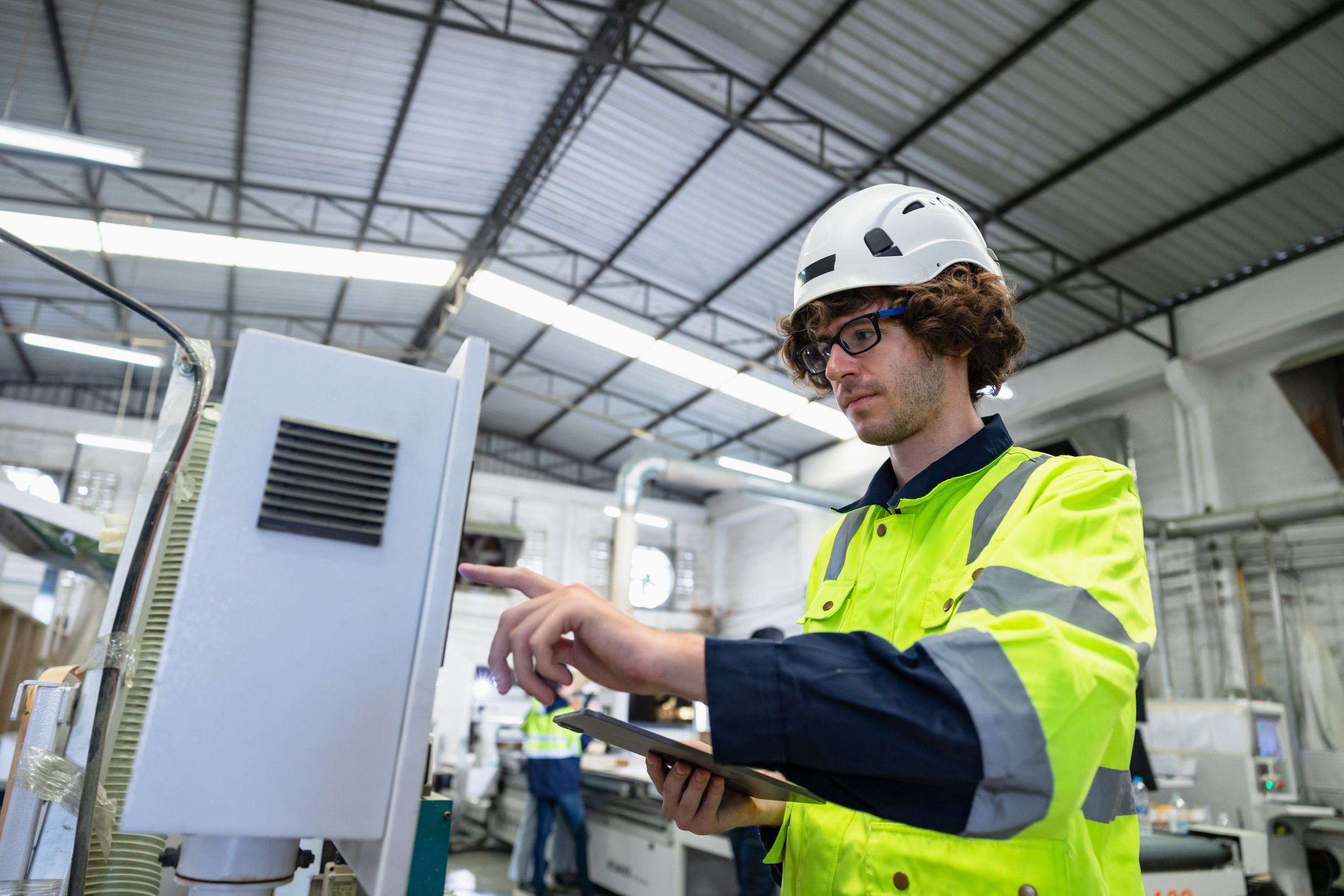
Machine monitoring refers to the process of tracking, collecting, and analyzing real-time data from production equipment to optimize efficiency and performance. It provides manufacturers with deep insights into machine utilization, downtime, and potential maintenance issues, allowing them to take proactive steps to improve production workflows.
At its core, a machine monitoring system, like Harmoni, consists of data collection software and analytics tools that work together to track machine performance and determine where inefficiencies exist. By leveraging IoT (Internet of Things) technology, manufacturers can continuously monitor equipment conditions, detect inefficiencies, and prevent costly breakdowns before they occur.
How Machine Monitoring Works
A typical machine monitoring system operates in several key steps:
- Data Collection: Machines are equipped with IoT devices that gather information on cycle time, machine uptime, and more critical inputs for understanding equipment effectiveness.
- Real-Time Transmission: The collected data is transmitted to a centralized software platform, either via cloud-based or on-premise solutions.
- Data Analysis: Advanced algorithms and tools analyze the data to identify performance patterns, inefficiencies, and potential maintenance needs.
- Actionable Insights: Operators and managers receive reports, alerts, and dashboards to make informed decisions that improve machine utilization and productivity.
- Continuous Optimization: Based on real-time feedback, manufacturers can adjust processes, reduce downtime, and maximize overall efficiency.
A Shift from Traditional to Smart Manufacturing
Before modern machine monitoring systems, manufacturers relied on manual tracking, paper logs, and visual inspections to assess machine performance. These outdated methods often led to delays, inaccurate data, and unexpected equipment failures.
With the rise of Industry 4.0 and smart manufacturing, real-time machine tracking has become an essential tool for data-driven decision-making. Companies that implement machine monitoring experience higher productivity, better resource allocation, and a significant reduction in downtime costs. More importantly, they gain the ability to measure overall equipment effectiveness in real time, rather than relying on delayed or incomplete reporting.
By understanding what machine monitoring is and how it works, manufacturers can take the first step toward creating a more efficient, profitable, and technologically advanced production environment.
Key Components of a Machine Monitoring System
A machine monitoring system is made up of multiple components that work together to track, analyze, and optimize equipment performance. These components can be broadly categorized into hardware and software elements, each playing a crucial role in ensuring seamless machine data collection and analysis.
Hardware Components of Machine Monitoring
1. Sensors for Data Collection
Machine monitoring systems rely on various types of sensors to track machine activity in real time. These sensors measure things like machine activity and production status, cycle times and operational status, tracking how long machines are running, idle, or down. Systems like Harmoni connect directly to the machine controlled to read this information automatically, making it vastly more accurate than pure sensor-based systems.
By continuously capturing data, this eliminates guesswork and provides real-time insights into machine performance.
2. IoT Devices for Connectivity
The Internet of Things (IoT) has transformed manufacturing by enabling machines to communicate with monitoring software via wireless or wired networks. IoT devices act as the bridge between machines and centralized data platforms, allowing for:
- Real-time remote monitoring of production equipment.
- Automated alerts and notifications for maintenance and downtime events.
- Seamless integration with cloud-based analytics platforms.
3. RFID and Barcode Scanners for Workflow Tracking
Some highly advanced machine monitoring systems, like Harmoni, incorporate RFID (Radio Frequency Identification) and barcode scanning to track:
- Operator clock in/out and labor tracking
- Material movements across the shop floor.
- Operator usage patterns and machine interactions.
- Production status and order progress.
- Machine-based authentication based on operator permissions
- Correct programs and work instructions based on the job
These tracking technologies help reduce human error and improve traceability in manufacturing operations.
Software Components of Machine Monitoring
1. Machine Data Collection Software
A machine monitoring system is only as good as its ability to aggregate, store, and analyze data. The ability to access machine data collection software allows you to:
- Processes real-time machine performance data and converts it into actionable insights.
- Provides real-time visual dashboards and reports to operators and managers.
- Helps manufacturers identify inefficiencies and areas for improvement.
2. Cloud vs. On-Premise Systems
Manufacturers can choose between:
- Cloud-based monitoring systems – Ideal for companies that need remote access, scalability, and minimal IT infrastructure.
- On-premise monitoring systems – Suitable for organizations that require full control over data security and system integration.
3. Integration with ERP and MES Systems
A modern machine tracking system should seamlessly integrate with:
- ERP (Enterprise Resource Planning) software, to synchronize production data with business operations.
- MES (Manufacturing Execution Systems), to enhance production scheduling, quality control, and process automation.
By combining machine monitoring with ERP/MES integration, like Harmoni’s system, manufacturers gain a complete view of their production environment, making it easier to optimize workflows and reduce inefficiencies.
How Machine Monitoring Works
Understanding how machine monitoring works is crucial for manufacturers looking to optimize production efficiency and reduce downtime. A machine monitoring system follows a structured process that collects, analyzes, and leverages real-time data to improve operational performance.
Step-by-Step Process of Machine Monitoring
1. Data Collection from Machines
The process begins with real-time data collection from manufacturing equipment.
- Sensors and IoT devices are attached to machines to track key performance indicators (KPIs), such as machine utilization, speed, cycle counts, cycle times, and more.
- Barcode scanners and RFID technology may also be used to track material flow and operator interactions.
- The collected data is sent to a centralized monitoring system, either cloud-based or on-premises.
2. Real-Time Transmission to a Centralized System
Once data is gathered, it needs to be processed and stored in a way that manufacturers can use effectively.
- Data can be transmitted through wired or wireless networks to a machine monitoring platform.
- In a cloud-based system, data is accessible from any location and can be shared across multiple facilities.
- On-premise systems keep data stored locally, providing manufacturers with direct control over security and accessibility.
3. Data Processing and Visualization
A machine monitoring system converts raw machine data into easy-to-understand visual insights through:
- Real-time dashboards that display machine status (running, idle, down).
- Performance reports highlighting trends in machine tracking and efficiency.
- Real-time OEE indicator lights that give managers instant visual cues about a machine’s performance.
- Automated alerts and notifications that warn operators of anomalies or potential machine failures.
4. Identifying Inefficiencies and Predictive Maintenance Needs
By analyzing the collected data, manufacturers can identify:
- Bottlenecks and inefficiencies causing production slowdowns.
- Underutilized machines that need schedule adjustments.
- Signs of equipment failure before they cause downtime (predictive maintenance).
5. Optimization and Continuous Improvement
Machine monitoring is not just about data collection—it’s about using insights to make better decisions.
- Production schedules can be adjusted to optimize throughput.
- Operators and maintenance teams receive alerts to perform preventative maintenance, reducing costly repairs.
- Managers can identify patterns that lead to waste, inefficiency, or unnecessary downtime.
Benefits of Machine Monitoring for Manufacturers
Implementing a machine monitoring system provides manufacturers with significant advantages, from reducing downtime to improving overall efficiency. By leveraging real-time machine tracking and data analytics, companies can make informed decisions that optimize production, reduce costs, and increase profitability.
Increased Machine Utilization and Efficiency
One of the primary benefits or advantages of machine monitoring is maximizing machine utilization—ensuring that equipment is running at peak efficiency rather than sitting idle. With real-time data collection, manufacturers can:
- Identify bottlenecks and adjust production schedules accordingly.
- Reduce idle time by ensuring machines are always operating when needed.
- Improve workflow coordination between machines and operators.
- Increase production output without needing to invest in additional equipment.
By tracking utilization metrics, manufacturers gain full visibility into machine performance, allowing them to make data-driven improvements to boost efficiency.
Reduced Downtime and Predictive Maintenance
Unplanned machine downtime is one of the most expensive challenges in manufacturing. A machine monitoring system helps reduce these losses by:
- Detecting early warning signs of equipment failure before breakdowns occur.
- Sending automated alerts to maintenance teams, allowing for proactive repairs.
- Enabling predictive maintenance, reducing the need for emergency repairs.
- Providing historical performance data to improve long-term maintenance planning.
Case Study: WessDel’s Productivity Gains with Machine Monitoring
A great example of machine monitoring’s impact is WessDel, a manufacturing company that implemented the Harmoni machine tracking system to improve operational efficiency. After using real-time machine monitoring, they:
- Gained 17 productive hours per employee per month.
- Reduced machine downtime significantly, leading to higher throughput.
- Improved scheduling efficiency, ensuring optimal use of all machines.
This case study proves that machine monitoring systems don’t just reduce downtime—they create measurable productivity and cost-saving benefits.
Enhanced Quality Control and Compliance
Machine monitoring isn’t just about efficiency—it also helps manufacturers maintain high-quality production standards by:
- Detecting anomalies in machine performance that could affect product quality.
- Tracking environmental conditions (e.g., temperature, pressure) that impact manufacturing precision.
- Ensuring regulatory compliance by providing detailed machine operation logs.
- Providing authentication that approved operators with clearance are allowed to work on highly secured projects and view controlled documentation
By continuously monitoring machine health and performance, manufacturers can reduce defects, maintain consistency, and meet industry standards more effectively.
Cost Savings and Return on Investment (ROI)
Investing in a machine monitoring system leads to long-term financial benefits by:
- Reducing unexpected repair costs through predictive maintenance.
- Lowering energy consumption by optimizing machine efficiency.
- Minimizing material waste by improving production accuracy.
- Maximizing labor productivity, ensuring that operators focus on value-adding tasks.
How Fast Can You See ROI?
Most manufacturers experience a positive return on investment (ROI) within a month of implementing a machine monitoring system like Harmoni. By eliminating inefficiencies, companies can increase profitability without additional capital expenditures.
Types of Machine Monitoring Systems
Not all machine monitoring systems are the same. Depending on a manufacturer’s needs, different systems offer varying levels of data collection, analysis, and automation. Choosing the right type of machine tracking system ensures maximum efficiency and cost-effectiveness.
Real-Time Machine Monitoring
Real-time machine monitoring, like Harmoni, is the most advanced and widely used system, providing instant insights into machine performance. This system collects and analyzes data as machines operate, allowing manufacturers to:
- Identify and address downtime issues immediately.
- Monitor key metrics like machine utilization, energy consumption, and cycle time.
- Receive instant alerts when machines underperform or require maintenance.
Best For:
✔ High-speed, high-volume manufacturing environments.
✔ Companies looking to optimize machine uptime and efficiency in real time.
Historical Data Analysis Systems
This type of machine monitoring focuses on long-term performance tracking rather than immediate, real-time insights. Data is collected over time to help manufacturers:
- Identify recurring downtime patterns and inefficiencies.
- Analyze productivity trends over weeks, months, or years.
- Make informed, data-driven improvements to production workflows.
Best For:
✔ Companies interested in continuous improvement strategies.
✔ Manufacturers looking to optimize machine performance over time.
Condition-Based and Predictive Maintenance Systems
Condition-based and predictive maintenance systems use machine data collection and AI-driven analytics to detect early signs of wear and tear. These systems help manufacturers:
- Reduce unexpected machine failures by predicting issues before they cause downtime.
- Optimize maintenance schedules based on actual machine condition monitoring rather than fixed schedules.
- Lower repair costs by fixing minor issues before they turn into major problems.
Best For:
✔ Manufacturers with high-value machinery that require precision monitoring.
✔ Companies aiming to transition from reactive to proactive maintenance.
Cloud-Based vs. On-Premise Machine Monitoring Systems
Choosing between cloud-based and on-premise machine monitoring depends on business size, security requirements, and IT infrastructure.
| Feature | Cloud-Based System | On-Premise System |
| Access | Accessible from anywhere via web or mobile | Requires local network access |
| Scalability | Easily scalable for multiple locations | Limited by internal IT infrastructure |
| Data Security | Data stored in the cloud with encryption | Data remains within the company’s network |
| Setup & Maintenance | Minimal setup, vendor-managed maintenance | Requires in-house IT management |
| Best For | Companies needing remote access and easy scalability | Manufacturers prioritizing data control and security |
Choosing the Right Machine Monitoring System for Your Business
Implementing a machine monitoring system is a strategic investment that can dramatically improve efficiency, uptime, and cost savings. However, selecting the right system requires careful consideration of your manufacturing needs, existing infrastructure, and long-term business goals.
Key Factors to Consider When Choosing a Machine Monitoring System
1. Compatibility with Existing Equipment
Not all machine monitoring solutions work with every type of equipment. Before investing, manufacturers should:
- Ensure the system can integrate with both legacy and modern machines.
- Check for IoT compatibility to support real-time data collection.
- Verify whether additional hardware (e.g., sensors, RFID, or barcode scanners) is required.
2. Scalability and Flexibility
As businesses grow, so do their machine monitoring needs. A scalable system should:
- Support additional machines and production lines without costly upgrades.
- Offer customizable dashboards and reporting tools to fit evolving requirements.
- Work across multiple facilities, especially for manufacturers with multiple locations.
3. Cloud vs. On-Premise Implementation
- Cloud-based systems allow remote access, making them ideal for manufacturers with distributed operations.
- On-premise systems provide greater data control and security, making them suitable for companies with strict IT policies.
- Hybrid solutions exist for companies needing both local control and remote monitoring.
4. Integration with ERP and MES Systems
A machine monitoring system should seamlessly integrate with existing:
- ERP (Enterprise Resource Planning) systems, allowing manufacturers to align manufacturing machine data with production schedules and financial reports.
- MES (Manufacturing Execution Systems) to enable real-time shop floor management.
5. User-Friendliness and Accessibility
A system should be easy to implement and use for:
- Operators who need to track machine performance.
- Maintenance teams who use alerts for proactive repairs.
- Managers who rely on dashboards to analyze efficiency trends.
How to Evaluate Machine Monitoring Providers
When selecting a provider, manufacturers should ask the following:
✔ What features are included? (e.g., real-time alerts, predictive maintenance, mobile access)
✔ How secure is the system? (Cloud encryption, local storage security, user access controls)
✔ What level of customer support is available? (technical support, training programs, onboarding assistance)
✔ What are the total costs? (Upfront hardware costs, software subscriptions, maintenance fees)
✔ Can the system provide real-world case studies? (Success stories from other manufacturers)
A reliable provider should offer demonstrations, trial periods, and a clear ROI analysis to help manufacturers make an informed decision.
Common Pitfalls to Avoid When You Implement Machine Monitoring
1. Resistance to Change
Operators and staff may resist new technology due to fear of complexity or job displacement.
Solution:
- Provide training and education to help employees understand the benefits.
- Start with a pilot program before full-scale implementation.
2. Data Overload and Analysis Paralysis
Too much machine data can lead to confusion if not managed properly.
Solution:
- Focus on key performance indicators (KPIs) that align with business goals.
- Use custom dashboards to simplify reporting and decision-making.
3. Poor Integration with Existing Systems
A machine monitoring system should work seamlessly with ERP, MES, and other production tools.
Solution:
- Verify compatibility before implementation.
- Work with vendors who offer integration support.
4. Ignoring Security Considerations
Manufacturers handling sensitive production data should ensure their monitoring system:
- Encrypts data transmissions to prevent cyber threats.
- Has user authentication controls to limit access.
Case Study: How WessDel Improved Productivity with Machine Data Monitoring
Real-world success stories provide the best proof of how advanced machine monitoring systems like Harmoni can transform manufacturing operations. One such example is WessDel, a precision manufacturing company that leveraged machine monitoring technology to improve efficiency, reduce downtime, and increase productivity.
The Challenge: Inefficiencies and Downtime Issues
Before implementing a machine monitoring system, WessDel faced several challenges common in the manufacturing industry:
- Lack of real-time visibility into machine utilization and downtime.
- Inefficient scheduling, leading to underutilized machines.
- Unplanned downtime due to unexpected machine failures.
- Difficulty identifying productivity bottlenecks.
Without clear data on machine performance, WessDel struggled to optimize workflows and ensure maximum efficiency.
The Solution: Implementing a Machine Monitoring System
To address these issues, WessDel adopted a real-time machine monitoring system that enabled them to:
✅ Track machine utilization and identify inefficiencies.
✅ Receive real-time alerts for unexpected machine downtime.
✅ Improve scheduling and production planning with data-driven insights.
✅ Optimize maintenance strategies with predictive analytics.
By integrating machine monitoring software with their existing ERP system, WessDel was able to connect data from the shop floor to management-level decision-making.
The Results: 17 More Productive Hours Per Employee Per Month
After implementing Harmoni, WessDel experienced significant improvements in their operations:
- Increased machine utilization, ensuring equipment was being used efficiently.
- Reduced downtime by proactively addressing machine failures before they occurred.
- Enhanced operator productivity, allowing employees to focus on high-value tasks.
- Gained 17 additional productive hours per employee per month, leading to higher overall output.
By using real-time machine tracking, WessDel transformed their production workflow, resulting in higher efficiency and reduced costs.
Conclusion: Why Every Manufacturer Needs a Machine Monitoring System
In today’s fast-paced manufacturing environment, efficiency, uptime, and data-driven decision-making are more critical than ever. A machine monitoring system empowers manufacturers to track real-time machine performance, reduce downtime, and optimize productivity—all while cutting costs and improving overall operational efficiency.
By investing in machine tracking and predictive maintenance solutions, manufacturers can:
✔ Maximize machine utilization and eliminate inefficiencies.
✔ Reduce unexpected downtime and extend equipment lifespan.
✔ Improve product quality by identifying performance issues early.
✔ Increase profitability with data-driven process optimization.
✔ Stay competitive in the era of Industry 4.0 with AI-powered insights.
The success story of WessDel, which gained 17 additional productive hours per employee per month, is proof that machine monitoring isn’t just a convenience—it’s a necessity for modern manufacturing.
Take the Next Step Toward Smarter Manufacturing
If you’re looking to improve efficiency, reduce costs, and optimize your shop floor operations, now is the time to invest in a machine monitoring system.
Want to see how machine monitoring can transform your manufacturing process?
👉 Contact us today for a demo and take the first step toward smarter, data-driven production.
Final Thoughts
Machine monitoring is no longer optional—it’s a strategic advantage that helps manufacturers stay ahead of the competition. By leveraging real-time data, AI-powered analytics, and predictive maintenance, companies can maximize efficiency, minimize waste, and drive long-term success.
The future of manufacturing is connected, automated, and optimized—and machine monitoring is at the heart of that transformation.
