October 14, 2026
How to Prevent the Wrong CNC Program from Reaching a Machine
Read More
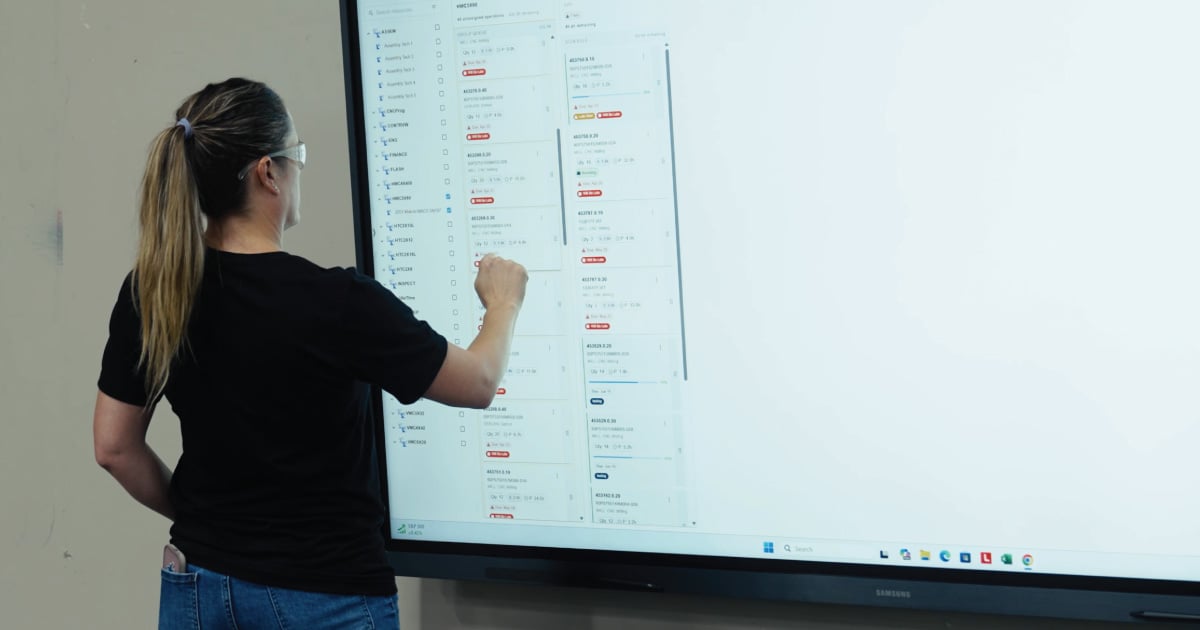
The way things get made is changing—and not slowly. Across the country, machine shops and mid-size manufacturers are adopting smarter tools, collecting better data, and making faster decisions. This shift is powered by what’s known as Industry 4.0 and smart manufacturing, also referred to as the fourth industrial revolution and smart manufacturing. Fueled by technologies like the industrial internet and advanced data analytics, it’s not just for the big guys anymore — and it’s driving new expectations for smart factory solutions.
If you’ve ever wondered what these terms actually mean—or how they apply to your operations—you’re in the right place. At its core, Industry 4.0 is about connecting your machines, systems, and people to work together more efficiently. Smart manufacturing brings that concept to life on your shop floor, using real-time data and automation to improve quality, speed, and profitability through cyber physical systems that connect equipment, software, and teams.
For operations managers, plant leads, IT teams, and shop owners, this shift offers a real opportunity. Not just to keep up—but to get ahead. With the right tools, you can reduce downtime, improve throughput, empower your team, and build a more resilient business.
The best part? You don’t need to overhaul everything to get started. In this guide, we’ll walk through exactly what Industry 4.0 and smart manufacturing mean, how they work, and what kind of results you can expect when you bring these principles to your facility to support efficient production processes.
To understand where the manufacturing industry is headed, it helps to understand how we got here. The term Industry 4.0 refers to the fourth major revolution in manufacturing—one that’s focused on digital transformation, connectivity, and real-time data. It empowers manufacturing businesses to compete in some increasingly complex markets, like the automotive industry.
Here’s a quick breakdown of how we got to this point:
So what makes Industry 4.0 different?
It’s not just automation—it’s intelligent automation. It’s not just software—it’s connected software. And it’s not just tracking data—it’s using that data to adjust operations, improve productivity, and reduce waste.
For machine shops and mid-size manufacturing companies, Industry 4.0 brings the tools to compete with larger operations—without needing massive capital investments. Systems can now be modular, scalable, and cloud-based, which means they can grow with you instead of holding you back.
If you manage a facility, oversee business operations, or handle IT infrastructure, Industry 4.0 gives you a clearer picture of what’s happening on the production floor—right now. It replaces guesswork with data analytics. It cuts out manual entry and delays. It shortens response times and tightens processes.
That’s why you should care.
Now that you know what Industry 4.0 is, let’s look at how it actually plays out on the shop floor. That’s where smart manufacturing comes in.
Think of smart manufacturing as the practical application of Industry 4.0 principles. It’s how you bring connectivity, cloud computing, automation, and real-time data into your everyday manufacturing process—without completely reinventing the wheel.
It’s a production process that uses advanced technologies to:
Unlike traditional manufacturing, where information is often delayed or siloed, smart manufacturing systems let every part of your operation talk to each other—from machines and operators to scheduling systems, supply chain management, and quality control often alongside a manufacturing execution system to coordinate data and actions between the shop floor and business systems.
Here are the building blocks that make smart manufacturing work:
Smart manufacturing isn’t just about tech—it’s about using new technologies to work smarter. Whether that means reducing scrap, reducing manufacturing errors, speeding up changeovers, or giving your team better instructions, the goal is to create efficient manufacturing processes and make your entire operation more agile and efficient. Additive manufacturing and smart machines provide additional flexibility and performance advantages that traditional tools can’t match.
For machine shops and mid-size manufacturers, the beauty of smart manufacturing is that it’s scalable. You don’t need to buy new machines or build a factory from scratch. Many shops start by digitizing one part of their process—like job tracking or operator sign-ons—and expand from there.
It’s not a massive leap. It’s a series of small, smart steps that smart manufacturing makes and that lead to measurable results.
So what does all this actually look like in a real-world shop?
Let’s walk through a day in a smart factory—where machines, operators, and production systems are all connected and working together through real-time data.
Imagine this at your production facility:
That’s a smart factory.
Harmoni makes this kind of workflow possible within your manufacturing operations—without requiring you to overhaul your entire operation. It’s built specifically for machine shops and mid-size manufacturers who want to modernize with digital technologies but need tools that are simple, scalable, and fast to implement.
Here’s how Harmoni fits into the smart factory 4.0 ecosystem:
This isn’t theoretical. Shops using Harmoni have already reported major gains in productivity by eliminating wasted motion, preventing errors, and keeping everyone—machines and people—on the same page. The result? Optimized workflows, streamlined sales processes, and improved customer satisfaction.
And because Harmoni doesn’t require machine replacement or complex integrations, you can start small and scale at your own pace.
If you manage a shop floor, oversee operations, or handle IT in a manufacturing facility, the benefits of Industry 4.0 and smart manufacturing are not just theoretical—they’re measurable, practical, and often immediate.
Here’s what you can expect when you start adopting smart technologies in your shop:
✅ Reduced Downtime
With real-time job tracking and clear visibility into machine status, you can act on issues as they happen—before they cause delays. Whether it’s a machine sitting idle or a process that’s stuck waiting for input, smart systems let you fix problems fast.
✅ Faster Turnaround and Delivery Times
When job files load automatically and work instructions are digital and accurate, setups go faster. Parts move through production with fewer interruptions, and you can hit more delivery deadlines with confidence.
✅ Better Scheduling Accuracy
Smart manufacturing gives you a live view of what’s actually happening on the floor. That means you can schedule based on facts—not guesses—and make adjustments on the fly when priorities change. This leads to better alignment with sales forecasts and customer expectations.
✅ Less Scrap and Rework
When operators have clear instructions and built-in prompts for inspections, errors go down. Quality checks are logged consistently, and deviations are caught early, reducing waste and increasing yield.
✅ Improved Visibility
With smart systems in place, everyone—from operators to plant managers—can see what’s running, where it stands, and what’s needed next. No more chasing status updates or walking the floor to find answers. These insights also help refine supply chain management and inventory planning.
✅ Empowered Employees
Smart manufacturing doesn’t replace your people—it makes them more effective. When workers have clear instructions, faster access to information, and fewer repetitive tasks, they can focus on what they do best: running parts and solving problems.
Modernizing doesn’t just make your operations smoother—it also makes your shop more competitive, more agile, and more attractive to customers who value quality, speed, and accountability.
Despite the clear benefits, many manufacturers still hesitate to adopt smart manufacturing technologies. And most of the time, that hesitation is based on outdated assumptions or misinformation.
Let’s take a look at the most common myths—and the reality behind them.
Truth:
You don’t need to be a large enterprise to implement smart manufacturing. In fact, smaller and mid-size shops often see faster results because they can move quickly and focus on the areas that matter most. Many smart manufacturing tools today are modular and designed to scale with your needs.
Truth:
Smart manufacturing doesn’t require buying new machines or replacing your entire system. Many solutions are built to work with the equipment and processes you already have. With cloud-based tools and subscription models, the cost of entry is lower than ever—and often pays for itself in reduced downtime and increased efficiency.
Truth:
You don’t need a team of software engineers to succeed with Industry 4.0. The best tools are built for real-world operators—designed to be simple, visual, and intuitive. Many systems look and feel like the apps your team already uses outside of work.
Truth:
Smart manufacturing isn’t about cutting people out of the process. It’s about giving your team better tools so they can do their jobs more effectively. When repetitive tasks are automated and key information is always at their fingertips, operators can focus on what really matters—producing great parts and solving real problems.
Truth:
If you’re tracking jobs manually, struggling with downtime, or relying on tribal knowledge to keep things running, then you’re more ready than you think. Industry 4.0 is designed to solve exactly those problems, and many shops start small with just one or two improvements before expanding further.
Dispelling these myths is the first step toward building a smarter, more resilient operation. You don’t need to change everything—you just need to change something.
The good news? You don’t need to dive in headfirst or overhaul your entire operation overnight to start seeing the benefits of Industry 4.0 and smart manufacturing.
In fact, some of the most successful shops take a step-by-step approach—focusing on quick wins, building team buy-in, and scaling from there.
Here’s how to get started:
Start by identifying where you’re losing time, making errors, or relying too heavily on manual input. Common areas include:
Instead of trying to digitize everything at once, choose one area that’s causing pain or limiting growth. That could be:
Solving one problem well is often more valuable than implementing five tools halfway.
Look for tools that are:
Avoid solutions that feel like IT projects. Focus on tools designed for the shop floor.
Even the best technology will fail if your team isn’t on board. Involve operators, supervisors, and support staff from the start. Show them how the changes will make their jobs easier—not harder.
Simple visual dashboards, digital prompts, and automated workflows can remove frustration and reduce human error.
Before you launch anything, take baseline metrics. Track things like:
Then, monitor how those numbers change over time. Even small improvements can lead to big gains when multiplied across your team and machines.
Starting small doesn’t mean thinking small. Each smart step builds momentum and brings you closer to a more productive, competitive, and resilient operation.
Once you’ve decided to start moving toward smart manufacturing, the next question is: What solution should you choose?
There’s no shortage of tools and platforms out there promising to make your shop smarter. But not all of them are built for the realities of a machine shop or mid-size manufacturing facility. The best solution isn’t just the most powerful—it’s the one your team will actually use, every day, to get real results.
Here’s what to look for when evaluating a smart manufacturing system:
You should be able to see job status, operator activity, and machine utilization in real time—from anywhere. Whether you’re on the floor, in the office, or off-site, your system should deliver live data that helps you make faster, more informed decisions.
With Harmoni, supervisors and managers can access clear, role-based dashboards that show exactly what’s happening on every machine without having to leave their desk.
If your team can’t use it, it won’t work. Look for a system that’s simple, visual, and designed for busy operators—especially those without a technical background.
Harmoni’s interface is built specifically for shop floor teams. It offers touch-friendly displays, guided workflows, and badge or PIN login so operators can get what they need fast—with minimal training required.
Smart manufacturing means reducing the time your team spends searching for files, loading programs, or troubleshooting setups. Integrated with your industrial internet infrastructure, this ensures optimal performance and almost zero errors. Your system should push the right program to the right machine at the right time—no USB drives, no risk of running the wrong job.
This is one of Harmoni’s signature features: automated program loading tied to job numbers and operator sign-ons, ensuring everything is where it should be, when it should be.
You don’t need to do everything on day one. Choose a solution that lets you start with the basics—like job tracking or sign-on automation—and grow into more advanced features over time, like quality control integration, multi-factor authentication, or ERP connections.
Harmoni is modular by design. Whether you’re rolling it out on five machines or fifty, it can scale with you as your needs evolve.
Don’t settle for software vendors who hand you a login and disappear. Choose a solution provider who understands advanced manufacturing, sales cycles, supply chain constraints, and the specific needs of your business. They need to speak your language and be 100% invested in your success.
Harmoni’s team has deep experience in the industry and provides onboarding, ongoing support, and hands-on help when you need it—so your implementation is smooth and your team is never stuck.
A smart manufacturing solution should reduce friction, not add it. When you find the right tool, your entire shop—from the operator to the owner—feels the difference.
The best way to understand the impact of Industry 4.0 and smart manufacturing is to see it in action. Here are a few examples of real shops that made the leap—and the results they achieved.
These aren’t giant corporations with endless budgets. They’re mid-sized manufacturers, just like yours, who took smart steps and saw real returns.
The Challenge:
Operators were spending too much time between jobs—searching for files, confirming setups, or waiting for instructions. Productivity was taking a hit, and management had little visibility into what was happening in real time.
The Smart Manufacturing Move:
WessDel implemented Harmoni to automate program delivery, enable RFID sign-ons, and provide live dashboards across the floor.
The Result:
✅ 17 productive hours gained per operator per month
✅ Faster changeovers
✅ Dramatic increase in visibility and operator accountability
The Challenge:
Maradyne Corporation, an ISO-certified manufacturer specializing in components for large diesel engines, sought to enhance operational efficiency and productivity within their Turbo® Precleaner product line. They faced challenges with real-time production visibility and streamlined workflows.
The Smart Manufacturing Move:
Maradyne integrated Harmoni’s technology into their spot welding cell and assembly line. This implementation aimed to automate job tracking, enhance labor documentation, and provide real-time production insights.
The Result:
According to John Barrish, General Manager for Maradyne Corporation, “Maradyne is positioning itself for success and relevance in the marketplace for the next decade. I believe that Harmoni is a key component in achieving that next level of performance.”
The Challenge:
MSI, a precision machining company, faced communication barriers between their machine monitoring systems and Enterprise Resource Planning (ERP) software. This disconnect led to errors and inefficiencies in production scheduling and execution.
The Smart Manufacturing Move:
MSI invested in Harmoni, an advanced machine monitoring system that seamlessly integrated with their ERP software, enabling real-time data exchange between the shop floor and management systems.
The Result:
This strategic integration exemplifies how connecting machine monitoring with ERP systems can lead to substantial improvements in manufacturing efficiency and accuracy.
These case studies demonstrate that adopting smart manufacturing solutions like Harmoni can lead to significant improvements in production visibility, accuracy, and customer satisfaction. By addressing specific operational challenges on your production lines with tailored smart technologies, manufacturers can achieve measurable gains in efficiency and competitiveness.
Smart manufacturing isn’t a trend—it’s the new normal. But even as more shops embrace industry 4.0 and smart manufacturing, the tools and technologies behind it continue to evolve.
Here’s what’s coming next in the world of connected, data-driven manufacturing—and why preparing now puts you ahead of the curve.
Artificial intelligence is moving from theory to the shop floor. Future systems will analyze data with thousands of data points—from machine performance to order history—to recommend:
Instead of just showing you what’s happening, these machine learning systems will help you decide what to do next—faster and with greater accuracy.
The future of smart factory industry 4.0 operations will rely even more on seamless communication between machines, software, and people. That means:
Manufacturers already using connected platforms—like Harmoni—are well-positioned to take advantage of this next level of integration.
As more machines connect to the internet or the cloud, the risk of cyber threats grows. Expect a rise in:
The future of Industry 4.0 is smart and secure—with solutions that balance connectivity with protection.
What once required massive budgets and months of implementation can now be rolled out in weeks or even days. Solutions like Harmoni are leading this shift by offering:
The barrier to entry is lower than ever, which means forward-thinking shops can move quickly and win big.
Tomorrow’s factories will be more autonomous, more responsive, and more efficient. But the shops that win in the future are the ones taking smart steps today.
Industry 4.0 and smart manufacturing aren’t just for tomorrow’s factories—they’re already reshaping how today’s most efficient shops operate. Real-time data, connected machines, and smarter workflows aren’t optional anymore. They’re how manufacturers compete, grow, and succeed in a changing world.
Whether you’re dealing with delayed jobs, rising costs, unpredictable downtime, or outdated manual systems, smart manufacturing offers a clear path forward. It helps you move from reactive to proactive. From guesswork to clarity. From isolated teams to integrated systems.
And you don’t need to do it all at once. You just need to take the first step.
Solutions like Harmoni make that possible. With tools built specifically for machine shops and mid-size manufacturers, you can:
Shops across North America are already in the midst of their smart manufacturing implementation process and are seeing the results: more uptime, faster delivery, fewer errors, and stronger margins.
The question isn’t whether you’ll adopt smart manufacturing.
It’s whether you’ll lead—or catch up later.
Ready to explore how Industry 4.0 and smart manufacturing can work in your shop?
Start small. Start smart. But start now.