November 18, 2026
From AI Pilot to Shop-Floor Practice: Where Should Manufacturers Keep a Human in the Loop?
Read More
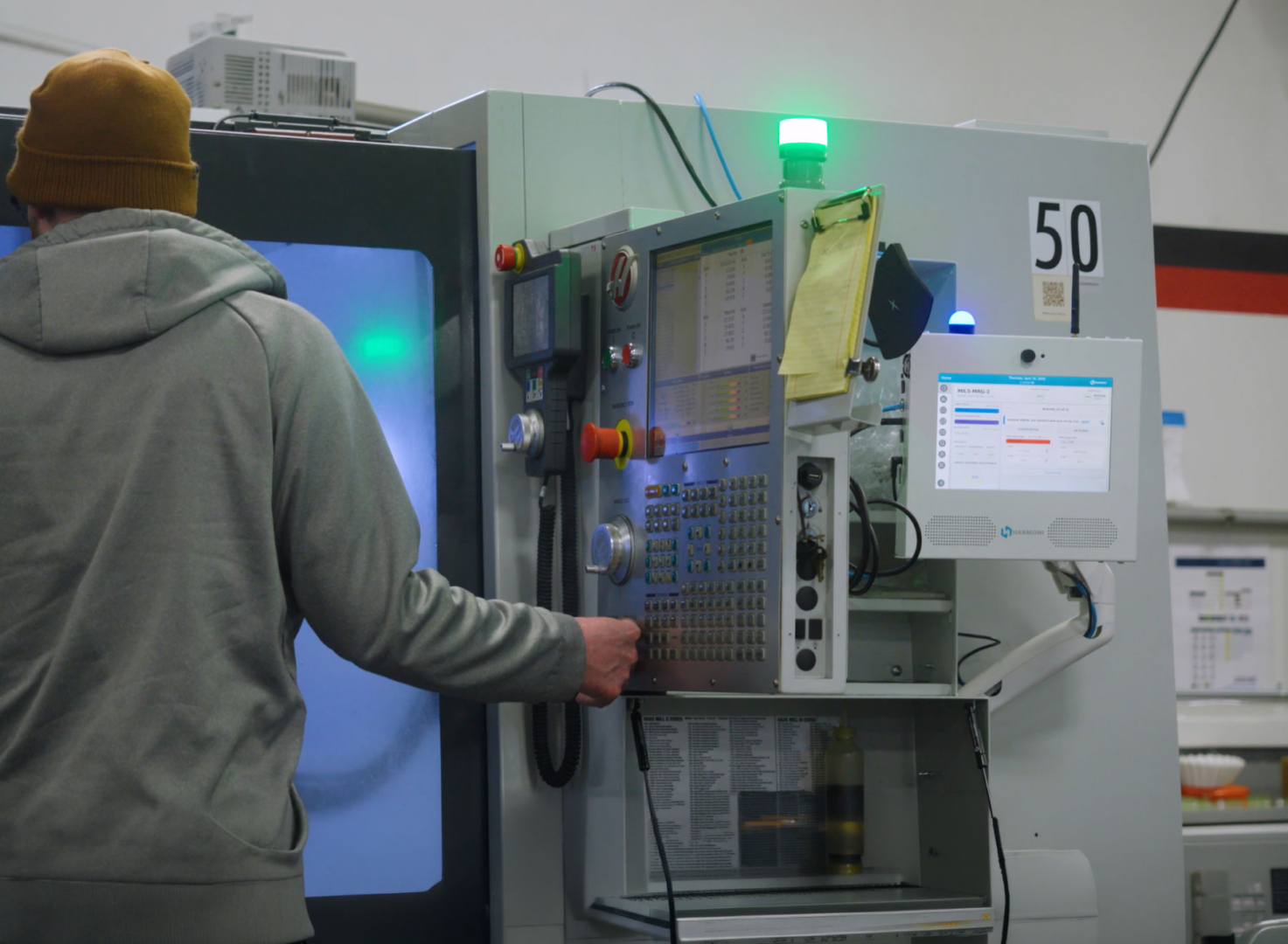
Manufacturers have more information about production than ever. Machines report cycle counts and alarms. ERP systems track orders and inventory. Operators record progress, quality checks, and downtime. Dashboards bring many of these signals into view. Yet when a job falls behind, a machine stops, or a quality issue appears, teams can still spend valuable time figuring out what is happening and what to do next.
The reason is simple: data volume and decision quality are not the same thing. More data can help people understand production, but only when it is connected to the situation at hand, trusted by the people using it, and available in time to guide an action.
A machine status by itself rarely explains what matters. “Stopped” is a useful signal, but a supervisor may also need to know which job is running, whether the stop is expected, how long the machine has been idle, what operation is next, and whether the delay affects a due date.
Without that context, employees may have to compare a machine screen with a schedule, ask an operator for an update, and check an ERP record. Each source may be accurate on its own, but the person making the decision has to assemble the full picture manually. That takes time and can lead to different interpretations across shifts or departments.
The same issue appears in production reporting. A count of completed parts becomes more useful when it can be compared with the target for that job, the time remaining in the shift, and the quality requirements for the operation. The number is still important. Its meaning depends on the work around it.
Factories often collect information in separate systems built for different purposes. Machine controls describe equipment activity. ERP systems manage orders and materials. Quality records capture inspection results. Operators and supervisors contribute information that may live in paper notes, spreadsheets, or conversations.
When those signals do not connect, teams absorb the cost in small, repeated tasks: looking up the latest schedule, confirming whether a setup is complete, finding the right program, checking a count, or relaying a status update. A dashboard can make information easier to see, but visibility alone does not remove the work of reconciling it.
This is one reason a factory can have plenty of data and still rely on phone calls, walkarounds, and individual memory to coordinate production. The gap is often not a lack of information. It is the effort required to turn separate updates into a shared, current understanding.
Timing matters as much as accuracy. A report that explains yesterday’s downtime may help with a review, but it cannot help a supervisor respond to a blockage happening now. A status entered after a job has moved on may be correct historically and misleading for the next decision.
Useful operational information should reflect what is happening close to the moment a decision is needed. That does not mean every metric needs to update every second. It means the information must be current enough for the action: dispatching work, responding to a stoppage, confirming a process step, or notifying the right person about a risk.
People will not make decisions from information they do not trust. If machine counts regularly differ from the count in a report, if downtime reasons are inconsistent, or if job status is stale, employees create workarounds. They keep their own notes, verify numbers by hand, or wait until someone confirms the update.
Those workarounds can be sensible responses to unreliable information, but they make it harder to establish one shared view of production. Improving data quality involves more than adding sensors or fields. It also means defining how information is captured, connecting it to the work being performed, and making discrepancies visible so teams can resolve them.
A useful operational view helps answer practical questions: Which jobs are at risk of missing their targets? What is preventing the next operation from starting? Is a machine waiting for material, an operator, a program, or a decision? Which issue needs attention first?
Responding to a stoppage. A machine stops partway through a job. The alarm tells the operator the machine is idle, but not how urgent the stoppage is. When machine status is connected to the active job, quantity completed, due date, and next operation, the operator can judge whether to troubleshoot immediately, call maintenance, or keep work moving on another ready job while help is on the way. The data does not make the decision for the operator; it gives them the context to prioritize.
Checking the right program. Before machining a part, an operator needs to confirm that the program at the control matches the approved revision for the active job. If the job, program version, and process requirements are connected, the operator can catch a mismatch and resolve it before cutting parts, instead of discovering the problem during a later inspection. That makes the next step clearer: proceed, verify, or escalate.
The point is not to collect every possible metric or put every metric on one screen. It is to make relevant information available to the people responsible for acting on it, with enough context to understand what it means. For one role, that may mean a shift-level view of work in progress. For another, it may mean the current status of a machine, job, or process requirement.
When teams can see how machine activity, production work, process requirements, and operator updates relate to one another, they spend less time piecing together the situation and more time addressing it. The same connected information can also support better follow-up: identifying recurring causes, reviewing performance, and deciding where a process needs attention.
More factory data creates value when it helps people move from a signal to a clear, timely decision. That requires connected information, useful context, dependable updates, and a practical way for teams to respond.
Factory Orchestration brings automation, process control, and production visibility into a coordinated operating model. It helps manufacturers connect the information and actions that shape work on the shop floor, so teams can understand what is happening and make the next decision with greater clarity.
The measure of a data initiative is not how much information it produces. It is whether the people running production can use that information to keep work moving, address problems sooner, and make decisions with a shared understanding of the factory.