October 14, 2026
How to Prevent the Wrong CNC Program from Reaching a Machine
Read More
Over the last decade, machine shops have spent heavily on visibility. Spindle monitoring, OEE dashboards, and utilization reports are now common, even in shops with a few dozen people. That’s real progress. For the first time, many owners can see what their machines are actually doing instead of guessing.
But visibility has a ceiling. A dashboard can tell you a machine sat idle for a third of second shift. It can’t tell the operator which revision of the drawing is current, remind them that this job needs an in-process check at part five, or record their time without a trip to the terminal. Monitoring describes the problem. Someone still has to solve it, usually in the middle of a shift, from memory.
That gap between knowing and doing is where most shops lose their hours. Closing it takes a different kind of technology: not more monitoring, but orchestration.
Ask most shop owners why a machine was idle and you’ll hear about setups, material, maintenance. Those matter. But spend a full shift next to an operator and a different picture emerges. A surprising share of the day goes to small, unglamorous tasks that no report captures:
None of these looks like a crisis. Each takes a few minutes. Across every workcenter, every shift and every job change, they add up to hours a day of time that isn’t making chips.
They also create risk. The wrong program, an outdated revision or a skipped inspection step is rarely a skills problem. It’s usually a coordination problem: the right information didn’t reach the right person at the moment they needed it. When that happens, the result is scrapped parts, rework and late shipments.
Here’s a simple exercise: pick one operator and one shift, and write down every time they stop producing to find, ask, wait or record something. Most shops that try it are surprised by the total.
Monitoring tools are built to collect data and report it upward. The operator generates the data, and a manager reviews it, often the next day or the next week. That’s useful for spotting trends. It does little for the person at the machine right now.
There are three structural limits:
In most shops, that leaves experienced operators as the real integration layer. They hold disconnected systems together with experience and tribal knowledge. It works until they retire, and many of them will soon.
Most manufacturing software, including ERPs, scheduling tools and quality systems, was designed for people sitting at computers. It assumes a keyboard, time to navigate menus and attention to spare.
The shop floor offers none of that. An operator may be wearing gloves, standing in noise, with a minute or two between cycles. If getting information requires walking to a shared terminal and clicking through five screens, it won’t happen consistently. Paper fills the gap, and the data that reaches the office is late, incomplete or reconstructed from memory.
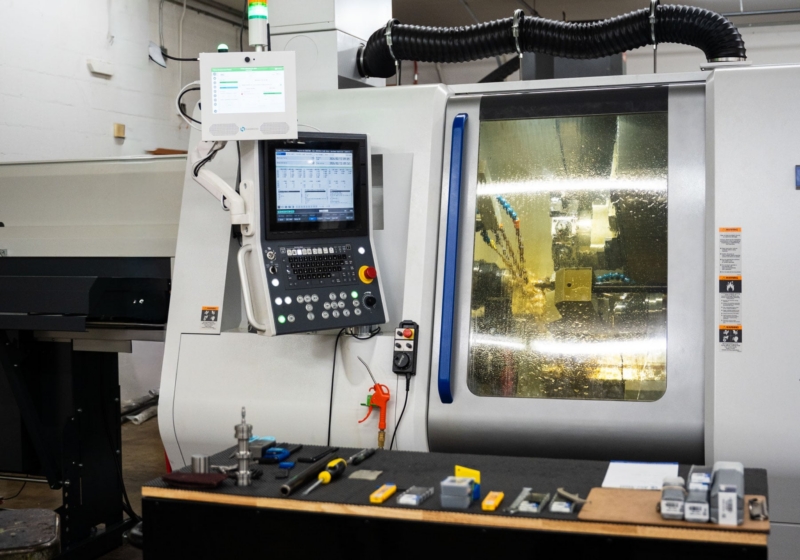
Technology that works on the floor has to fit inside the physical flow of production. It has to be at the workcenter, fast to use and genuinely helpful to the operator, not just to the people reviewing reports.
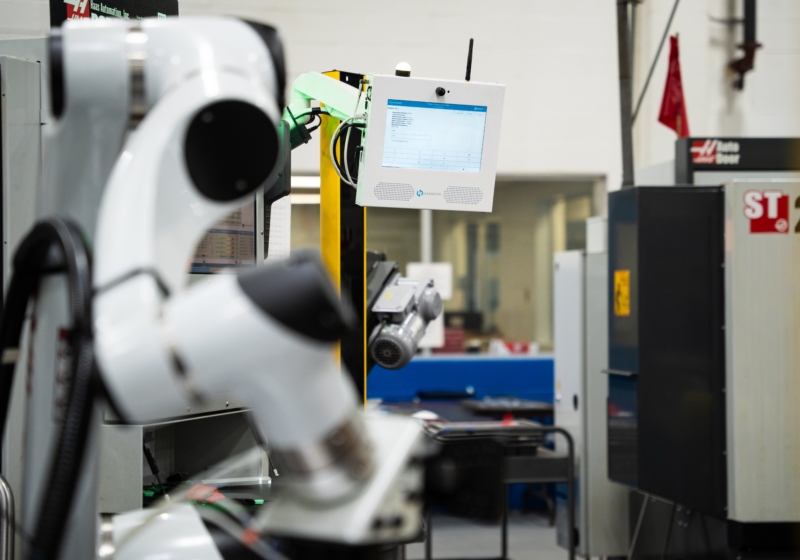
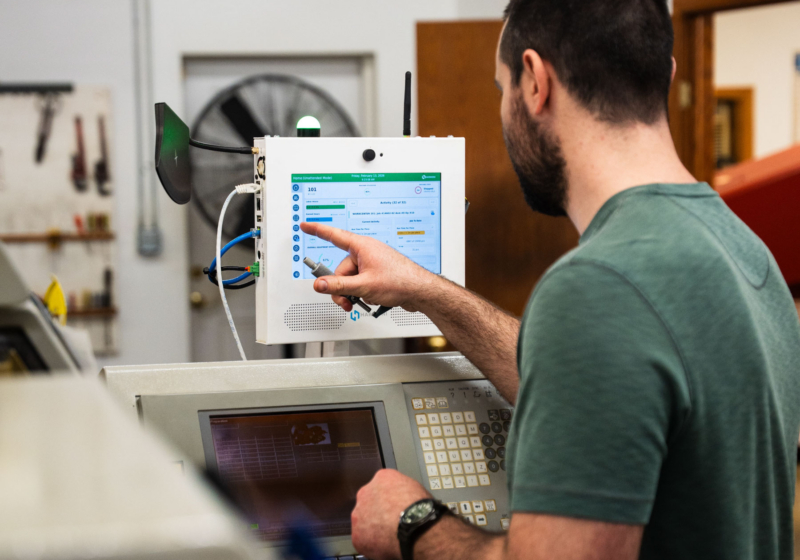
Orchestration coordinates the people, machines, systems and processes required to get work done, at the point where the work happens.
In practice, that means:
The difference is who benefits and when. Monitoring gives management a clearer view of yesterday. Orchestration changes how work is performed today, so the impact shows up during the shift: less administrative time, fewer preventable errors and more productive time at each workcenter.
Harmoni’s founders came to this problem from inside factories, not from case studies. David Caputo has spent more than a decade owning and operating aerospace and defense manufacturers. Again and again, those factories had invested heavily in machines, software and people, yet the floor still ran on paper, spreadsheets and tribal knowledge. Existing tools solved individual pieces of the operation. Nothing coordinated how the work actually got done.
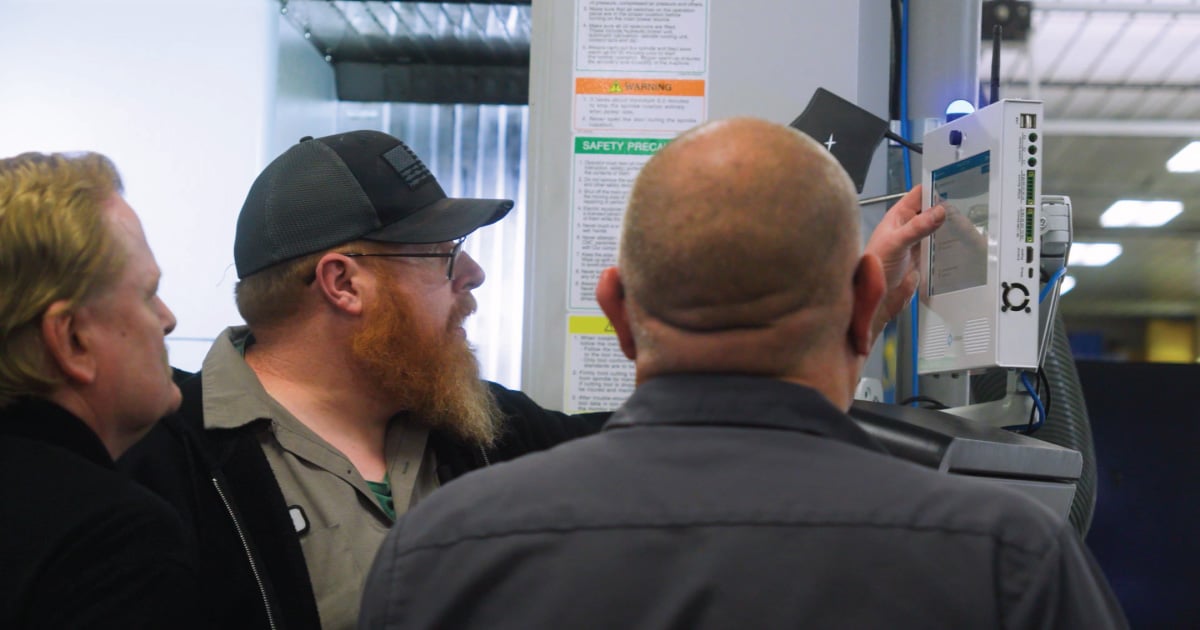
That’s why Harmoni puts purpose-built devices at individual workcenters, connected to the systems running the factory, with HAL, our context-aware AI, available to operators on the floor. The goal isn’t another screen for management. It’s to make every operator’s shift run more smoothly.
If you’re weighing whether monitoring is enough, start here:
If the honest answers involve walking, waiting, re-keying or finding out too late, the problem isn’t visibility. It’s coordination.